• العربية
  • فارسی
Brand
  • Iran Insight
  • Politics
  • Economy
  • Analysis
  • Special Report
  • Opinion
  • Podcast
  • Iran Insight
  • Politics
  • Economy
  • Analysis
  • Special Report
  • Opinion
  • Podcast
  • Theme
  • Language
    • العربية
    • فارسی
  • Iran Insight
  • Politics
  • Economy
  • Analysis
  • Special Report
  • Opinion
  • Podcast
All rights reserved for Volant Media UK Limited
volant media logo

Iranian religious singer abducted and killed - IRGC media

Aug 8, 2026, 09:27 GMT+1

Hamidreza Rajabzadeh, a pro-establishment Iranian religious singer, was abducted and killed after being missing for several days, the IRGC-affiliated Tasnim news agency reported on Saturday.

Tasnim said Rajabzadeh's family received a video showing his body following the killing.

Police are investigating the circumstances of the abduction and killing and working to identify those responsible, according to the report.


Most Viewed

US imposes new Iran sanctions as officials say Hormuz deal is near
1

US imposes new Iran sanctions as officials say Hormuz deal is near

2

Mecca pact ties three Sunni powers together as Iran-backed attacks loom

3
PODCAST

Ending Iran war could expose regime to its greatest threat yet, experts say

4
ANALYSIS

US miscalculated Iran’s resilience and hurt deal prospects, expert says

5
INSIGHT

What the Pentagon learned from the Iran war

Banner
Banner
Banner

Spotlight

  • US miscalculated Iran’s resilience and hurt deal prospects, expert says
    ANALYSIS

    US miscalculated Iran’s resilience and hurt deal prospects, expert says

  • What the Pentagon learned from the Iran war
    INSIGHT

    What the Pentagon learned from the Iran war

  • Iran hardliners push renewed hijab crackdown despite widespread defiance

    Iran hardliners push renewed hijab crackdown despite widespread defiance

  • A Khamenei in-law is openly recruiting to replace the Islamic Republic

    A Khamenei in-law is openly recruiting to replace the Islamic Republic

  • Executions in Isfahan renew calls to end German city partnership

    Executions in Isfahan renew calls to end German city partnership

  • Iran's energy crisis is political, not seasonal
    ANALYSIS

    Iran's energy crisis is political, not seasonal

•
•
•

More Stories

Cleric summoned after calling to replace Islamic Republic with ‘Islamic government’

Aug 8, 2026, 09:14 GMT+1
100%

Iranian cleric Mohammad-Bagher Kharrazi was summoned to the Special Clerical Court after calling for the Islamic Republic to be replaced by a more hardline “Islamic government” and outlining plans to mobilize a 250,000-strong network capable of surrounding government sites.

Judiciary spokesperson Asghar Jahangir said on Saturday that legal proceedings began immediately after Kharrazi's recent remarks and that he had now been summoned to the court, which handles cases involving members of the clergy.

“Immediately after his recent remarks, legal action was initiated to prosecute him,” Jahangir said, adding that Kharrazi's case was under criminal investigation and further details would be released after the proceedings.

‘Islamic Republic doesn't work anymore’

In a video released this week, Kharrazi said the Islamic Republic had “reached a stage where, in this form, it simply doesn't work anymore” and said his organization had already drawn up plans for replacing it with an “Islamic government.”

Kharrazi, who heads the Hezbollah of Iran organization, said his group had produced 60 volumes of plans covering state institutions and had maintained what he described as a “shadow government.”

He also outlined a recruitment drive intended to build a nationwide network of 250,000 supporters, saying it could “surround all the ministries” and converge on Tehran following a single announcement.

  • A Khamenei in-law is openly recruiting to replace the Islamic Republic

    A Khamenei in-law is openly recruiting to replace the Islamic Republic

“Mr. Khamenei and the government must understand that a 250,000-strong organization stands ready to move,” he said.

Kharrazi also attacked President Masoud Pezeshkian, calling him a “buffoon” who “understands nothing,” and said his government “will not reach its end.”

Claims about Khamenei

Kharrazi is tied by marriage to Iran's ruling family: his sister is married to Masoud Khamenei, a brother of Supreme Leader Mojtaba Khamenei.

He has also presented himself as a longtime confidant of the new supreme leader, saying he has known him for four decades and held numerous private meetings with him. In his latest remarks, Kharrazi said Mojtaba Khamenei's thinking was “far more radical than his father's.” His accounts of private conversations and the supreme leader's views cannot be independently verified.

The leader's office had already publicly rejected earlier remarks Kharrazi attributed to Mojtaba Khamenei, including that Pezeshkian's next resignation would be accepted, describing them as unauthenticated and false.

Iran hardliners push renewed hijab crackdown despite widespread defiance

Aug 7, 2026, 16:36 GMT+1
•
Maryam Sinaiee
100%

Iranian hardliners are intensifying pressure on authorities to enforce compulsory hijab, as recent cafe closures and online campaigns raise fears of a renewed crackdown despite widespread defiance of the dress code.

Last week, hardline lawmaker Mohammad Naghd-Ali told parliament that another member had told him he cries after every parliamentary session because of the current state of women's dress.

Naghd-Ali fiercely criticized President Masoud Pezeshkian's administration for refusing to implement the controversial hijab law approved in 2024, saying the government was allowing what he described as "nudity” and “immorality" to spread.

Although the new legislation was finalized in 2024, its implementation has been suspended following a decision by the Supreme National Security Council, reportedly out of concern that enforcing it could trigger unrest similar to the nationwide protests that erupted after Mahsa Amini's death in 2022.

Existing compulsory-hijab rules, however, remain legally in force.

Hardline activists have likewise blamed Pezeshkian for what they portray as the country's cultural decline.

"If Pezeshkian's incompetent and secular government continues for another two years, even today's level of dress will become something people long for," conservative commentator Hassan Abbasi wrote on social media. "Pezeshkian is standing against God's command on hijab and wants to return Iran's cultural climate to the Pahlavi era."

Social media campaign seeks broader crackdown

Hardline activists have also intensified an online campaign demanding tougher enforcement.

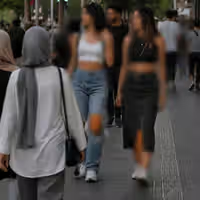
In recent days they have circulated videos showing unveiled women in tight-fitting sleeveless tops serving customers at a well-known restaurant in Tehran—scenes that would have been almost unimaginable in the capital and other cities until only a few years ago. Such activists frequently describe these styles as "nudity" or "body display."

One hardline X user, allegedly tied to a state institution, wrote: "The first step in confronting unveiled women is confronting cafes and establishments that violate social norms." According to the post, enforcement is currently focused mainly outside Tehran but will gradually expand across the capital.

Hardline journalist Fereshteh Sadeghi similarly shared a photograph of an unveiled woman shopping outside Tehran and criticized those arguing that hijab should not be discussed while the country faces broader security challenges.

"They tell us not to talk about hijab in the middle of a war and not even to take pictures. Then when are we allowed to speak?" she wrote.

Yet Sadeghi also acknowledged the state's failure to restore widespread headscarf compliance.

"The battle to force the hijab back onto women is over; you can't force the hijab on their heads," she wrote in another post, while arguing that authorities should at least establish dress regulations to prevent what she called "body display."

Hijab as a political symbol

For many hardliners, compulsory hijab is not only a religious obligation but also a defining political symbol of the Islamic Republic.

"Hijab is the flag of Islam. Muslim society is recognized through hijab," conservative social media activist Alireza Akbari wrote.

Supporters of compulsory veiling frequently cite a ruling by Supreme Leader Ali Khamenei, who described unveiling as forbidden both religiously and politically.

Journalist Mehrdad Khadir argued in an article published by Asr-e Iran that women's dress is no longer among the public's primary concerns.

"The way women and girls dress is not a concern for the majority of people," he wrote. "The face of the city has changed, and it will not return to what it once was."

According to Khadir, the country's real concerns are the threat of war and the collapse in living standards.

"In the current circumstances," he wrote, "it is unlikely—indeed impossible—that the authorities would surrender their judgment to those tears and turn an issue that has effectively been settled back into a national crisis. If there is anything worth crying over, it is the collapse of people's purchasing power."

Resistance through everyday life

Although enforcement has eased in many areas over recent years, critics argue that this should not be mistaken for legal liberalization because compulsory hijab laws remain fully in force even if they are not consistently applied.

The social landscape has nevertheless changed dramatically. Many women who continue to wear the hijab have also moved away from the traditional all-black chador and highly conservative appearance. Styles often described online as “hijab style” combine headscarves with colorful clothing, modern designs and fashion accessories.

Hardliners reject these styles as well, arguing that they contradict hijab's original purpose of discouraging attention and preserving modesty.

Opponents of compulsory veiling, meanwhile, say the increasingly visible presence of unveiled women reflects persistence rather than freedom.

"The type of clothing women wear in public still depends on the neighborhood, how they travel, even the day and time," one X user wrote. "The fact that we now see bolder styles is the result of the relentless struggle of brave women who accept the risks of dressing that way. Nothing has actually been liberated."

A Khamenei in-law is openly recruiting to replace the Islamic Republic

Aug 6, 2026, 14:34 GMT+1
•
Arash Sohrabi
100%
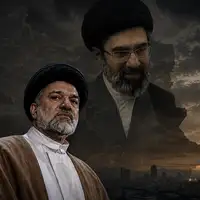
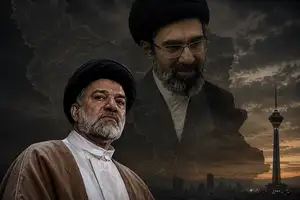
AI-generated illustration depicting Mohammad-Bagher Kharrazi (foreground) and Iran's Supreme Leader Mojtaba Khamenei (background) against a map of Iran and Tehran's skyline.

A cleric tied by marriage to Iran's ruling family has declared the Islamic Republic obsolete, telling followers that a shadow government already exists and urging them to build a 250,000-strong network to replace the system with an "Islamic government."

The roughly five-minute video of Mohammad-Bagher Kharrazi, released Wednesday, shows the head of the Hezbollah of Iran organization addressing a religious gathering, the kind of mosque pulpit from which much of Iran's clerical politics is conducted. What he delivered from it was not a sermon but an organizational plan.

"Before Mr. Saeed Jalili ever said 'I make the shadow government,' we had formed the shadow government, and we still have it... We have 60 thick volumes of plans covering the smallest details of every organ and institution," Kharrazi said, brushing aside the hardline politician who popularized the term.

"We have prepared plans for implementing the guardianship system, even for how to convert the Islamic Republic into an Islamic government. We have the organization and the planning. But because this transition has not happened, they are taking the Islamic Republic from us”

The Islamic Republic, he told the crowd, "has reached a stage where, in this form, it simply doesn't work anymore."

The arithmetic of a takeover

What separates the video from ordinary hardline grievance is that Kharrazi laid out numbers, methods and targets.

Each follower, he said, should recruit 17 people, and each of those another 17. "If we do this and organize at least 250 people in every city, with a thousand cities that makes 250,000 people," he said.

He offered to bankroll the first gathering himself, "at Hezbollah's own expense," promised a meeting of one hundred thousand, and told the audience the network would "surround all the ministries." The crowd answered with a salavat, the blessing on the Prophet that in such gatherings signals assent.

At another point he set the threshold at 530 organizers per city, a figure drawn not from arithmetic but from devotion: in the abjad letter-numerology cherished in his circles, he ties the number to the name of Fatemeh, the Prophet's daughter. The two figures do not reconcile, and may not be meant to.

He then described the endgame: "With one announcement, everyone comes to Tehran, and that single announcement will finish the work. Mr. Khamenei and the government must understand that a 250,000-strong organization stands ready to move."

The government of President Masoud Pezeshkian, he assured his listeners, "will not reach its end. Have no doubt."

Contempt for the republic, president by president

Kharrazi's case against the republic half of the Islamic Republic was delivered as a roll call. "Why should Mr. Hashemi win a vote in this country? Why should Mr. Ahmadinejad win a vote in this country? Why should Mr. Rouhani win a vote? Why should Mr. Pezeshkian win a vote?" The list, spanning nearly every president of the past four decades, implied that the office itself, not its occupants, is the error.

For the current occupant he reserved open abuse, calling Pezeshkian "this buffoon" who "understands nothing," and cursing the physician he blamed for promoting him: "God damn the accursed Marandi, Khamenei's doctor, who foisted Pezeshkian on the nation."

He damned the Guardian Council for approving such candidates, a complaint carrying its own footnote: the same council disqualified Kharrazi himself when he tried to run for president in 2013.

The faithful, he complained, have been reduced to carrying other men's loads. "Hezbollahi forces in this country have become pack mules," he said.

"What business do we have being pack mules for Ghalibaf, who understands nothing of the religion of Islam?"

‘Mojtaba is more radical than his father’

The video's most consequential claims concern the man Kharrazi presents as his patron. Describing "forty years of friendship, not mere acquaintance, and numerous private meetings," he told the crowd that the new supreme leader wants what he wants: "Mojtaba's thinking is far more radical than his father's."

He offered what he framed as an insider's history: that Mojtaba Khamenei was cast out of his father's office for three years by its deputy chief of staff, confined to his home and reduced to ferrying intelligence letters, with even some of his circle pushed away.

Kharrazi claimed credit for protecting the movement through that period: "They wanted to tear out Hezbollah by the roots. I did not let them."

None of these accounts can be independently verified, and they describe a man who has not been seen or heard in public since his selection five months ago.

The claims also come with a fresh credibility problem attached. Only days earlier, the leader's office publicly branded Kharrazi's previous quotations of Mojtaba Khamenei, that Pezeshkian's next resignation after 28 attempts would be accepted, as unauthenticated and false, warning that such material "serves the objectives of the ill-wishers and sworn enemies of the Iranian nation." Pezeshkian denied the resignation as well.

Kharrazi's response to that rebuke may be the most revealing sentence he has produced.

In a statement styled like a senior cleric's communique, he said he accepts the denial "out of respect" for the late and current leaders, "but we hope that after the important coming changes in those offices, this denial will still stand."

The changes he has in mind are not abstract. In the same week, Kharrazi announced that the new leader intends to remove Mohammad-Bagher Zolghadr as secretary of the Supreme National Security Council and hand the post to Mohsen Rezaei, his military aide.

"They are going to replace Mr. Zolghadr, and Mr. Mohsen Rezaei will take his place," he said, adding that Foreign Minister Abbas Araghchi has been told he has no right to intervene in the negotiations. A man rebuked for speaking in the leader's name answered by announcing the leader's next appointments.

The family and the record

Kharrazi, 65, is as embedded in the Islamic Republic's aristocracy as a cleric can be. His father, Ayatollah Mohsen Kharrazi, sits in the Assembly of Experts; his uncle, Kamal Kharrazi, ran Iran's diplomacy for years and headed its Strategic Council on Foreign Relations until died from injuries sustained in recent Israeli airstrikes in April; his brother Sadegh is a veteran diplomat; his sister is married to Masoud Khamenei, another of Ali Khamenei's sons.

Reuters has reported that the Nobitex cryptocurrency exchange, sanctioned by Washington for helping the Revolutionary Guards evade sanctions, belongs to the Kharrazi family.

His own record is a catalogue of the spectacular. In his 2013 presidential bid he promised to lift sanctions within months, to recover "the territories separated from Iran," from Tajikistan to Azerbaijan, without a drop of blood, and to triple the value of Iran's crashed currency, vowing to bring the dollar from above 3,000 tomans back down to 1,000.

The Guardian Council struck him from the ballot, and even before it did, the Hezbollah coordination council of East Azarbaijan province publicly disowned his group, accusing him of misusing the movement's name and the leader's, and reminding him that by the leader's own explicit guidance, any private quotation attributed to him is to be considered untrue. Thirteen years later, the leader's office is issuing him the same reminder about a different Khamenei.

In clips that went viral this year, he proposed building a nuclear bomb and detonating it in the Atlantic to send a tsunami toward the American coast, and mused about igniting a race war inside the United States.

He studied under Mohammad-Taghi Mesbah-Yazdi, the late theorist whose school long argued that the republic's elections were a concession to be outgrown, which is to say the manifesto is not his invention, only its loudest current recital.

Three readings of one video

The puzzle is not what Kharrazi said but what it means that he can keep saying it. In a state that imprisons filmmakers and poets for far less, a man has now twice in one week put words in the supreme leader's mouth, insulted the president on camera and announced a plan to encircle the ministries, without a knock on his door.

However it is read, the collision at the heart of the video is documented on both sides. The government's own leaked polling shows a society that has drifted decisively from clerical rule, with barely nine percent wanting things to stay as they are. The loudest organizing energy inside the system, on this week's evidence, wants to move the opposite way.

One reading is that the leader's office will now be forced to do more than issue denials, and that Kharrazi's next video will be his last.

A second is bleaker for the system: that there is no functioning leader capable of silencing anyone, and the in-law is filling a vacuum with his own voice.

A third, voiced in exile commentary, is that Kharrazi is not speaking for the present leadership at all but building a following for the day the question of who leads is reopened, including a future in which his own brother-in-law's household sits closer to the throne.

Under any of the three, the fact stands: five months into the new reign, the most detailed public plan for ending the Islamic Republic has come not from its opponents but from inside its founding family's circle, and it points toward more theocracy, not less.

Iran's parliament fades further from power after the war

Aug 5, 2026, 16:51 GMT+1
•
Behrouz Turani
100%
Lawmakers raise their hands to express opinion in a parliamentary debate, in Tehran, Iran, undated file photo

Iran's parliament has become all but irrelevant since the war, as power has shifted further toward the Revolutionary Guards and decision-making has moved ever deeper behind closed doors amid the unresolved leadership transition.

The shift has left lawmakers arguing over soaring inflation, corruption and economic policy while increasingly questioning what authority the Majles still retains.

Two interviews published Tuesday by moderate Khabar Online and pro-reform Rouydad24 offered sharply different diagnoses of Iran's economic crisis, but together painted a picture of a legislature struggling to remain relevant.

The interviews came after months of complaints from MPs that parliament has been sidelined, with Speaker Mohammad Bagher Ghalibaf limiting its work to sporadic online sessions while assuming an increasingly prominent role in high-level diplomacy.

"If you ask lawmakers at the parliament door how much a kilo of chicken, meat or bread costs, I swear to God most of them cannot tell you," outspoken former MP Gholamali Jafarzadeh Imenabadi told Khabar Online.

"This is because a massive gap has formed between our officials and the people."

Citing Parliamentary Research Center data, Imanabadi said less than seven percent of the Majles' resolutions over the past two years had addressed economic issues despite soaring inflation and the rising cost of basic goods.

‘Don’t weep, resign!’

Responding to a current MP who publicly wept over women's non-compliance with compulsory hijab laws, Jafarzadeh said officials should instead feel shame—or resign—over inflation, unemployment and empty stomachs.

"For the empty stomachs of the people, officials should ask for death, not just weep. For the state of inflation, they should resign," he said.

He also criticized what he described as parliament's misplaced priorities, questioning why Ghalibaf had become one of Iran's chief negotiators while lawmakers neglected their core duty of overseeing the government and tackling corruption and inflation.

Former conservative MP Hamidreza Taraghi offered a sharply different assessment in an interview with Rouydad24, blaming President Masoud Pezeshkian's administration rather than parliament for the country's economic turmoil.

"Regarding inflation and rising prices, the government follows methods that lack the necessary efficiency to control inflation," he said, arguing that weak oversight by the administration and the Central Bank lay behind many of the country's economic problems.

Taraghi also rejected suggestions that hardline MPs represented parliament as a whole: "The positions of 10 to 15 MPs should not be generalized to the entire parliament.”

He further defended the Majles against accusations of economic inaction, arguing that under Iran's constitution parliament could not introduce spending measures without identifying funding sources, leaving many economic decisions in the government's hands.

Elected bodies sidelined

The competing accounts reflect a broader debate over who bears responsibility for Iran's economic crisis. Moderates portray parliament as increasingly detached from both public concerns and the country's most pressing challenges, while hardliners argue its powers are constrained and responsibility rests primarily with the executive.

Yet the interviews also point to a deeper shift in Iran's political system.

Under former Supreme Leader Ali Khamenei, institutions including parliament, the Expediency Discernment Council, the Assembly of Experts and even the presidency steadily lost influence as authority became concentrated in the leader's office.

Since the five-month war with Israel and the United States, critics say that trend has accelerated, with the Revolutionary Guards and the power center surrounding Mojtaba Khamenei increasingly eclipsing the Islamic Republic's formal institutions.

Whether lawmakers blame the government, Ghalibaf or one another, the interviews suggest they are debating problems in a parliament many believe no longer has a role in decision-making..

Iran's president met Mojtaba Khamenei in the back seat of a car

Aug 4, 2026, 14:26 GMT+1
•
Mojtaba Pourmohsen
100%
Iranian President Masoud Pezeshkian

Iranian President Masoud Pezeshkian was taken to a secret Tehran location and allowed only minutes in a dark, tinted-window car with a man presented as Supreme Leader Mojtaba Khamenei, sources familiar with the episode told Iran International.

Pezeshkian could not see the man beside him and later asked whether the voice he had heard had really belonged to the supreme leader, according to the sources.

Their account of the only known meeting between Pezeshkian and the Islamic Republic’s third supreme leader differs sharply from the version the president has told in public.

In mid-May, Pezeshkian told a gathering of trade association representatives that he had spent two and a half hours with the new leader “in a cordial atmosphere.” Iran International’s sources said the encounter lasted only a few minutes, after which the president was asked to leave.

The meeting itself was a concession extracted under pressure. Khamenei's office agreed to it only after repeated requests from Pezeshkian and his threat to resign, the sources said, and the president was informed that, contrary to standard practice, he would not be received at the leader's usual residence.

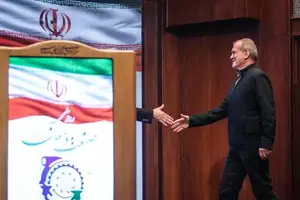
Instead, his security detail delivered him to an undisclosed location somewhere in Tehran. There he was taken from his own vehicle and seated in the back of a commercial car with tinted windows, where, apparently, Khamenei was already waiting. The spot was dark enough that the two men could not see each other, and Khamenei's guards did not permit a handshake. The conversation was carried entirely by voice.

The treatment reportedly angered Pezeshkian, who regarded it as humiliating. According to individuals in the president's office, he later asked whether the person beside him had in fact been the supreme leader, since he had only heard a voice in the dark.

It is unclear whether the remark was an expression of anger or genuine doubt. Pezeshkian has since requested a second meeting, this time at the leader's residence. The request has so far been denied.

A leader nobody sees

The president's uncertainty lands in a country that has neither seen nor heard its new ruler. In the roughly five months since the Assembly of Experts selected Mojtaba Khamenei to succeed his father, not a single audio recording or video of him has been released.

The silence has become a subject inside Iran's own state-aligned press. On Sunday, the website of the Hamshahri newspaper published a short video claiming that foreign intelligence services could trace any audio recording of the new leader and locate his hideout by measuring acoustic energy, analyzing the frequency signature of the electrical grid and examining background noise. The video added that spy agencies could analyze vocal-tract resonances to determine the extent of his injuries or anxiety, a claim that fed rather than calmed speculation about his condition.

The world's assessments diverge just as sharply. Three weeks ago, US President Donald Trump put the odds that Mojtaba Khamenei had been killed at 90 percent. Israel's prime minister recently said he is alive.

Even the government's own senior figures do not tell one story. "I have not seen Mojtaba Khamenei during this period, and only a limited number of people have met with him," Foreign Minister Abbas Araghchi said in a July interview with the online program The Story of the War. One day later, Pezeshkian said in a speech that the number of meetings with the leader had increased.

A resignation he cannot repeat

The strain between the president and the leader's office has since spilled into the open. In a video circulated on social media on Monday, Mohammad Bagher Kharrazi, a Khamenei family relative by marriage, said the new leader has formally warned that Pezeshkian's next resignation, after 28 threats or attempts, will be his last.

  • Khamenei warns Pezeshkian next resignation will be accepted, in-law says

    Khamenei warns Pezeshkian next resignation will be accepted, in-law says

"He declared it officially," Kharrazi said, "and that is why they packed up, turned down the wick, and stopped threatening to resign."

The warning matches Iran International's earlier reporting. A knowledgeable source said in late May that Pezeshkian had sent a formal letter to the leader's office asking to step down, a resignation driven by what the president described as the Revolutionary Guards' complete control over the running of the country.

A president who cannot resign, then, serves a leader he cannot see. Five months into the new reign, Mojtaba Khamenei remains unseen, unheard and unrecorded, a ruler his own president has met exactly once, in the dark, and still cannot be certain he has met at all.