The Independent International Fact-Finding Mission on Iran said the Islamic Republic’s response to protests that began in December 2025 amounted to a widespread and systematic attack on civilians involving unlawful killings, torture, arbitrary detention, enforced disappearances and severe restrictions on freedom of expression.
“The Iranian Government’s repression of the recent protests has led the Mission to find Iran responsible for gross human rights violations,” mission chair Sara Hossain told the council in Geneva, saying many amounted to crimes against humanity, including murder, imprisonment, torture and other inhumane acts.
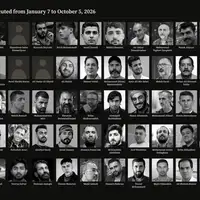
The mission said the crackdown marked a significant escalation from previous patterns of repression, citing the scale of killings and violence, internet shutdowns, mass arrests and the use of the death penalty. It said it could not independently verify the overall toll but believed the number of people killed and injured was likely far higher than the government’s figures of 3,038 deaths and 25,000 injuries.
Classified government documents, field reports and accounts from medical workers, witnesses and victims’ families reviewed by Iran International’s Editorial Board showed that more than 36,500 people were killed by security forces on January 8 and 9 alone.
However, independent verification has been impossible amid communications restrictions and government pressure.
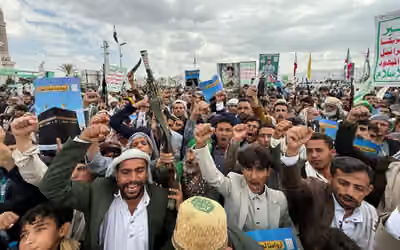
The unrest began on December 28 with protests over worsening economic conditions before spreading nationwide and turning into a broader challenge to the Islamic Republic.
In her Monday speech, Hossain said Iranians were now confronting both continued domestic repression and the large-scale US-Israeli military campaign that began on February 28.
She said Iranian authorities had also used the war to intensify persecution of protesters, describing the conflict as “a pretext for and accelerator of repression.”
Iran rejected the mission’s findings about its own conduct. Ambassador Ali Bahreini argued that economic pressure against Iran, combined with what Tehran describes as foreign manipulation and militarization of domestic unrest, amounted to crimes against humanity and accused the mission of ignoring those issues.
US war crime
The mission then turned to two US strikes carried out on the opening day of the war.
The United States and Israel launched attacks across Iran on February 28 in an operation Washington said was intended to severely weaken Iran’s military and prevent it from developing a nuclear weapon. President Donald Trump said at the outset that US forces would destroy Iran’s missile industry and navy, while Tehran denies seeking nuclear weapons. The attacks triggered Iranian retaliation against Israel and US-linked targets across the region.
Against that wider military campaign, the mission examined a US strike on the Shajareh Tayyebeh Primary School in Minab, Hormozgan Province.
Hossain said two cruise missiles hit the school, killing 157 people, including 123 boys and girls, according to sources the mission considered credible. She described it as a readily identifiable civilian building and said investigators found reasonable grounds to believe the strike amounted to the war crime of making a civilian object the object of an attack.
The school was adjacent to an Islamic Revolutionary Guard Corps naval complex, but investigators found no evidence that the building itself was being used for military purposes. The mission said the United States had failed to update information about the school in its targeting databases or adequately establish that it was a military objective, conduct it said amounted to more than mere negligence.
The mission reached a separate war-crimes finding over a US strike on a sports center in a residential area of Lamerd, Fars Province. Local authorities said 22 people — 10 women and 12 men — were killed. Investigators concluded there were reasonable grounds to believe the strike constituted an indiscriminate attack resulting in civilian deaths or damage to civilian property.
Hossain said repeated airstrikes and threats of further attacks continued to endanger civilians, destroy homes and livelihoods and disrupt access to education and healthcare. She called on all sides to conduct independent investigations into alleged violations of international humanitarian law, specifically urging Washington to investigate the two strikes and provide accountability and reparations where warranted.
Washington’s reaction
Washington rejected the conclusions. The Pentagon said its own investigation remained underway and that it had nothing further to announce, while White House spokeswoman Anna Kelly dismissed the Human Rights Council’s work and said Iran was the only party in the conflict to have committed war crimes.
US officials have maintained that American military operations comply with the law of armed conflict.
US Ambassador to the UN Mike Waltz also said Trump was expected to challenge the findings when he addresses the UN General Assembly on Tuesday, saying the president would continue to “call out the ridiculous.”