Trump says US military to reimpose naval blockade on Iran
US President Donald Trump said Monday the United States would reinstate a blockade targeting Iranian ships and customers while keeping the Strait of Hormuz open to vessels from all other countries.
“We are reinstating the THE IRANIAN BLOCKADE, so named because it is only stopping Iran’s ships or customers from entering or leaving,” he said in a post on Truth Social.
“The Hormuz Strait is OPEN, and will remain OPEN, with or without Iran,” Trump wrote, saying the measure would prevent only Iranian ships or their customers from entering or leaving the waterway.
Trump declared that the United States would become the “Guardian of the Hormuz Strait” and said Washington would charge a fee equal to 20% of all cargo shipped through the strategic passage to cover the costs of providing security.
“The process and formation will begin immediately,” he added.
File photo shows inmates sitting inside an overcrowded prison ward in Iran.
January protesters held in Greater Tehran Penitentiary are being kept in severely overcrowded and unsanitary conditions without adequate medical care, clean drinking water or sufficient food, according to multiple inmates and eyewitnesses who spoke to Iran International.
Several security prisoners held in Wards 1, 2 and 4 of Unit 6 described conditions that they said have worsened in recent months as authorities transferred growing numbers of detainees arrested during the January protests to the prison.
“Bedbugs crawl all over prisoners, and everyone is exposed to disease,” one inmate said. “Because of the overcrowding, if one person gets sick, the entire ward becomes ill.”
Overcrowding doubles prison capacity
According to the prisoners, each ward contains 15 rooms equipped with 15 beds, providing space for about 210 inmates after accounting for shared storage areas.
Authorities are housing roughly 500 prisoners in the same space, they said, forcing about half the inmates to sleep on floors or in corridors.
The overcrowding has contributed to infestations of bedbugs and lice and accelerated the spread of infectious illnesses, inmates said.
Former prisoners have previously described similar conditions at Greater Tehran Penitentiary, warning of severe overcrowding, inadequate healthcare and shortages of medical staff.
One former inmate said families often supply medicines because the prison clinic provides little treatment.
“The clinic does nothing,” the former prisoner said. “Only when someone is close to death are they transferred for medical care.”
Water, food and hygiene shortages
Prisoners said they have no reliable access to clean drinking water and must purchase bottled water from the prison store.
During the current summer period, however, the store has at times gone up to three days without bottled water, forcing inmates to drink tap water that they believe is unsafe.
Several inmates also described prison food as poor quality and said meals are occasionally not served, with one or two meals sometimes skipped every few days.
Political prisoners in Ward 6 also reported earlier this month that water supplies had been cut, air conditioning switched off and showers closed, which they said was intended to increase pressure on detainees. They also said weekly family visits had been suspended.
Cold showers, blocked toilets
Prisoners told Iran International that hot water is unavailable in prison showers throughout the year.
When inmates complain, prison officials tell them they cannot provide hot water and that prisoners must accept the conditions, according to the witnesses.
They also described blocked toilets that sometimes remain unusable for days, as well as shortages of cleaning supplies.
Dirty bedding, carpets and shared facilities have contributed to outbreaks of scabies and other contagious skin diseases, prisoners said.
Outdoor confinement in extreme heat
Witnesses also described mandatory outdoor exercise under direct sunlight during summer temperatures approaching 40 degrees Celsius.
Prisoners are required to remain in an uncovered yard for at least two hours each day and are not permitted to return indoors before the allotted time.
“The same happens in winter,” one inmate said. “Even if you were freezing, they would not allow you back inside.”
Protest detainees held alongside other prisoners
According to inmates, conditions deteriorated after authorities transferred large numbers of January protesters to Greater Tehran Penitentiary as prisons in the capital filled beyond capacity.
Some detainees said protest prisoners were placed in wards previously occupied by inmates convicted of theft and drug-related offenses.
Unlike Tehran's Evin Prison, where political prisoners often manage their own wards, Unit 6 at Greater Tehran Penitentiary is overseen by inmates convicted of ordinary crimes.
Several witnesses said that some of those inmates verbally abused protest detainees, encouraged confrontations and, in some cases, carried out violent attacks with the acquiescence of prison guards.
One witness said two protesters were stabbed during a confrontation, leaving one with severe hand injuries.
Several inmates said many of those arrested during the January protests are young adults, adding that the conditions inside the prison have left them in severe psychological distress while many remain in detention awaiting trial without being granted temporary release on bail.
Plastic bags, bottles and other household waste cover the bank of a river in Iran.
Plastic waste has become a major environmental challenge in Iran, with poor enforcement of waste management regulations allowing single-use plastics to pollute natural areas and water resources, the country's environment chief said on Sunday.
More than two decades after Iran adopted its Waste Management Law in 2004, large parts of the legislation remain unenforced, leaving serious shortcomings in the management of household, medical, agricultural and industrial waste, Department of Environment chief Shina Ansari said.
“Plastic waste, particularly single-use plastics, has become a serious problem for nature, coastlines, tourist areas and water resources,” Ansari said. “Studies show that microplastics are entering the food chain, water resources and even drinking water, posing a serious threat to human health and the environment.”
Plastic consumption has become a growing environmental concern in Iran, driven largely by the widespread use of shopping bags, disposable tableware, drink bottles and food packaging. A 2024 review of municipal waste found that plastics account for about 7% of Iran’s waste stream by weight.
Enforcement gaps persist
Regulations governing waste disposal and recycling exist, Ansari said, but have only been implemented sporadically, leaving many environmental problems unresolved.
A 2022 regulation intended to reduce plastic bag consumption required manufacturers to phase out bags thinner than 25 microns and imposed obligations on large retailers. Ansari said the measures, like many environmental regulations, have not been properly enforced.
Plastic waste washes ashore along a beach on Iran's coastline, highlighting persistent marine pollution caused by mismanaged waste and plastic debris entering coastal waters.
Many countries, she added, have introduced taxes, restrictions or bans on single-use plastic bags even before negotiations on a global plastics treaty are completed.
Short-lived use, long-term pollution
Around 95% of plastic bags in Iran are used only once, typically for between 12 and 20 minutes, before being discarded.
The problem is compounded by weak waste separation and recycling systems. Research on Iran’s plastic-waste sector points to gaps in regulation, enforcement, funding and technology, while informal collectors continue to play a major role in recovering valuable materials. As a result, much plastic waste is buried, openly dumped or left uncollected rather than being processed through an effective circular recycling system.
The bags can remain in the environment for 400 to 500 years before decomposing, contributing to long-term pollution of land and waterways, Ansari said.
The environmental effects are also increasingly visible. Researchers have detected microplastics in landfill areas, along Iran’s Caspian coast and in seawater, sediment and fish from the Persian Gulf.
An Iranian doctor in this file photo checks a patient's blood pressure during a medical examination at a healthcare facility in Iran.
Patients in Iran are increasingly turning to artificial intelligence for medical advice as healthcare costs outpace household incomes, prompting concerns from a public health expert that the technology could undermine treatment and trust between doctors and patients.
Unchecked reliance on AI for self-diagnosis and self-treatment risks compromising patient safety because the technology cannot replace physical examinations, diagnostic tests or clinical judgment, epidemiologist Hamid Soori told Khabar Online on Monday.
“Uncontrolled self-treatment and complete trust in AI recommendations, when there has been no physical examination, no diagnostic testing and many factors related to the illness have not been considered, could create a major challenge and dangerous consequences for public health,” Soori said.
The warning comes as AI-powered chatbots and search tools become a common first stop for many Iranians seeking explanations for symptoms before visiting a doctor. While the technology has expanded public access to health information, specialists say many users overestimate its reliability for diagnosing or treating medical conditions.
Healthcare costs fuel self-treatment
Soori said the problem is particularly acute in Iran, where many households struggle to keep pace with rising medical costs, encouraging more people to delay or avoid professional care.
“This situation is worse in countries where treatment costs are not proportionate to people's incomes,” he said. “Self-treatment has existed for years, but the arrival of AI could intensify its consequences.”
He warned that patients who arrive at clinics convinced by AI-generated advice may already have delayed treatment or taken inappropriate actions based on incomplete or inaccurate information.
Doctor-patient trust at risk
Beyond the clinical risks, Soori said greater dependence on AI could alter the relationship between physicians and patients.
“When patients come to doctors with information and recommendations generated by AI, in addition to the risk of worsening and complicating their illness and algorithmic errors, it may reduce trust in physicians' recommendations and disrupt the doctor-patient relationship,” he said.
He added that, like many emerging technologies, AI can be highly beneficial but also carries risks when it is widely accessible to people with limited medical knowledge.
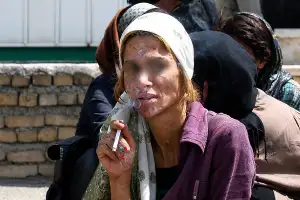
A woman smokes a cannabis cigarette in Iran in this undated file photo.
Women’s drug use has increased in Iran over the past decade, with cannabis products now the most commonly used substances among female users, a senior anti-narcotics official said on Sunday.
“The use of drugs among women has unfortunately increased over the past seven to 10 years, and this trend often begins with cigarette smoking,” Soleiman Abbasi, Director General of Treatment at Iran’s Drug Control Headquarters, told the ILNA news agency.
“Hashish and cannabis are the most common drugs used by women in society, and there is not a significant tendency among women to use other specific narcotic substances,” he added.
Women, Abbasi said, still account for far fewer drug users than men, although no precise official figures are available. Even so, he warned that addiction among women carries wider social consequences because of their central role in family life.
“When the mother of a family becomes addicted, the family structure quickly falls apart,” Abbasi said, adding that women who do not use drugs often play a key role in maintaining family cohesion.
Iran faces one of the world's most severe drug-use challenges because of its proximity to Afghanistan, historically the world's largest producer of opium, and the long-standing availability of opiates. Official and expert estimates suggest around 2.8 million Iranians are regular drug users, with broader estimates including occasional users exceeding four million.
Cannabis use gaining ground among younger women
Available research indicates cannabis use among Iranian women remains substantially lower than among men but has been rising, particularly among younger women and university students.
An Iranian woman smokes in this undated file photo.
A 2021 systematic review covering 90 Iranian studies found that 0.2% of women in the general population reported cannabis use during the previous year, compared with 1.3% of men. However, researchers identified a statistically significant increase in cannabis use among female university students between 2000 and 2020, reflecting growing consumption among younger, urban women.
Researchers have linked the trend to urbanization, changing social attitudes, easier access through informal networks, and greater exposure to global youth culture through the internet, while cautioning that stigma and legal risks likely result in substantial underreporting.
Abbasi also warned about the dangers posed by increasingly contaminated drugs.
Laboratory testing has found many seized narcotics contain harmful chemical impurities, including lead, which can worsen users' health and may contribute to fatal poisonings beyond the effects of the drugs themselves, he said.
He also highlighted overdose as a growing concern.
A study using data from Iran's Forensic Medicine Organization by Britain's Lancaster University recorded 11,944 drug-related deaths between March 2022 and March 2024, with men accounting for the overwhelming majority of fatalities and the average age at death around 37. Earlier official figures put annual drug-related deaths at roughly 3,000, suggesting the toll has increased sharply in recent years.
Vessels at the Strait of Hormuz, as seen from Musandam, Oman, June 22, 2026.
Hopes that the memorandum of understanding between Iran and the United States could evolve into a broader deal appeared increasingly remote on Monday as both sides carried out fresh strikes and clashed over control of the Strait of Hormuz.
The latest escalation saw the United States widen its attacks to dozens of locations across several Iranian provinces. While many of the reports could not be independently verified, they suggested a broader operational scope than in recent days.
US Central Command announced another round of strikes aimed at degrading Iran's ability to threaten commercial shipping through the Strait of Hormuz, the world's most important oil transit route.
State-affiliated Iranian media later claimed Tehran had launched extensive missile and drone attacks against US bases and vessels across the region.
Nour News, which is close to Iran's Supreme National Security Council, reported that the attacks had begun, while Sabereen News said several ballistic missiles had been fired from western and central Iran toward US military positions.
Bahrain's Interior Ministry subsequently activated air raid sirens and urged residents to avoid using or obstructing main roads unless necessary, adding that further safety instructions would follow.
A CENTCOM spokesperson told Al Jazeera that Iranian Revolutionary Guards forces had fired at commercial shipping in the strait, adding that US aircraft shot down an Iranian cruise missile and a one-way attack drone. Tehran has not confirmed those claims.
The maritime confrontation remained at the center of the escalation.
Iran continued to insist that the waterway remains under its control. Senior military officials said all foreign naval movements in the strait were under continuous surveillance and warned that no vessel would be allowed to enter Iranian territorial waters unlawfully.
In a strongly worded statement, Iran's Foreign Ministry accused the United States of violating both the memorandum of understanding and the UN Charter, saying American attacks over the past 24 hours had targeted transportation infrastructure, commercial shipping, cargo vessels and aviation facilities.
The ministry also accused Washington of pressuring Oman to undermine Iranian arrangements for managing shipping through Hormuz and warned Persian Gulf states against allowing their territory to be used for attacks on Iran.
It said the source of any attack on Iranian territory would be regarded as a legitimate target for retaliation.
The renewed military activity also rattled global markets.
Brent crude rose more than three percent in Asian trading as investors priced in the risk of prolonged disruption around Hormuz, through which roughly one-fifth of global oil supplies normally pass.
Regional governments appeared increasingly uneasy as the confrontation widened.
Iraq called for restraint and warned against actions that could endanger maritime navigation. Qatari officials, who had been attempting to preserve a diplomatic channel between Tehran and Washington, remained engaged with Iranian counterparts, although there was little indication mediation efforts were gaining traction.
Only days ago, officials on both sides continued to speak publicly about diplomacy. President Donald Trump said Iran had asked to continue talks and that Washington remained prepared to negotiate, while US officials described technical discussions as ongoing despite repeated violations of the ceasefire.
Those diplomatic signals now appear increasingly overshadowed by events on the ground.
Rather than serving as a bridge toward a broader agreement, the memorandum of understanding has become another point of contention, with each side accusing the other of violating its terms.