Iranian threats against Italian leaders are unacceptable, Tajani says


Iranian threats against Italian leaders are unacceptable, Italian Foreign Minister Antonio Tajani told Iran International on Monday.
“It is unacceptable. Italy is not fighting against Iran, so we do not understand this attack against Italy,” Tajani said on the sidelines of an EU Foreign Affairs Council meeting in Brussels.
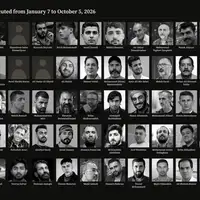
On Saturday, Tehran municipality-affiliated newspaper Hamshahri published an image of 13 world leaders, including Italian Prime Minister Giorgia Meloni, claiming they were on the Islamic Republic’s revenge list.
Tajani said Italy supported democracy, peace and freedom of navigation, describing any effort to block the Strait of Hormuz as a major mistake.
“Freedom of navigation is crucial for us,” he said. “On this, we support the American position, not the Iranian position.”





Plastic waste has become a major environmental challenge in Iran, with poor enforcement of waste management regulations allowing single-use plastics to pollute natural areas and water resources, the country's environment chief said on Sunday.
More than two decades after Iran adopted its Waste Management Law in 2004, large parts of the legislation remain unenforced, leaving serious shortcomings in the management of household, medical, agricultural and industrial waste, Department of Environment chief Shina Ansari said.
“Plastic waste, particularly single-use plastics, has become a serious problem for nature, coastlines, tourist areas and water resources,” Ansari said. “Studies show that microplastics are entering the food chain, water resources and even drinking water, posing a serious threat to human health and the environment.”
Plastic consumption has become a growing environmental concern in Iran, driven largely by the widespread use of shopping bags, disposable tableware, drink bottles and food packaging. A 2024 review of municipal waste found that plastics account for about 7% of Iran’s waste stream by weight.
Enforcement gaps persist
Regulations governing waste disposal and recycling exist, Ansari said, but have only been implemented sporadically, leaving many environmental problems unresolved.
A 2022 regulation intended to reduce plastic bag consumption required manufacturers to phase out bags thinner than 25 microns and imposed obligations on large retailers. Ansari said the measures, like many environmental regulations, have not been properly enforced.
Many countries, she added, have introduced taxes, restrictions or bans on single-use plastic bags even before negotiations on a global plastics treaty are completed.
Short-lived use, long-term pollution
Around 95% of plastic bags in Iran are used only once, typically for between 12 and 20 minutes, before being discarded.
The problem is compounded by weak waste separation and recycling systems. Research on Iran’s plastic-waste sector points to gaps in regulation, enforcement, funding and technology, while informal collectors continue to play a major role in recovering valuable materials. As a result, much plastic waste is buried, openly dumped or left uncollected rather than being processed through an effective circular recycling system.
The bags can remain in the environment for 400 to 500 years before decomposing, contributing to long-term pollution of land and waterways, Ansari said.
The environmental effects are also increasingly visible. Researchers have detected microplastics in landfill areas, along Iran’s Caspian coast and in seawater, sediment and fish from the Persian Gulf.
Patients in Iran are increasingly turning to artificial intelligence for medical advice as healthcare costs outpace household incomes, prompting concerns from a public health expert that the technology could undermine treatment and trust between doctors and patients.
Unchecked reliance on AI for self-diagnosis and self-treatment risks compromising patient safety because the technology cannot replace physical examinations, diagnostic tests or clinical judgment, epidemiologist Hamid Soori told Khabar Online on Monday.
“Uncontrolled self-treatment and complete trust in AI recommendations, when there has been no physical examination, no diagnostic testing and many factors related to the illness have not been considered, could create a major challenge and dangerous consequences for public health,” Soori said.
The warning comes as AI-powered chatbots and search tools become a common first stop for many Iranians seeking explanations for symptoms before visiting a doctor. While the technology has expanded public access to health information, specialists say many users overestimate its reliability for diagnosing or treating medical conditions.
Healthcare costs fuel self-treatment
Soori said the problem is particularly acute in Iran, where many households struggle to keep pace with rising medical costs, encouraging more people to delay or avoid professional care.
“This situation is worse in countries where treatment costs are not proportionate to people's incomes,” he said. “Self-treatment has existed for years, but the arrival of AI could intensify its consequences.”
He warned that patients who arrive at clinics convinced by AI-generated advice may already have delayed treatment or taken inappropriate actions based on incomplete or inaccurate information.
Doctor-patient trust at risk
Beyond the clinical risks, Soori said greater dependence on AI could alter the relationship between physicians and patients.
“When patients come to doctors with information and recommendations generated by AI, in addition to the risk of worsening and complicating their illness and algorithmic errors, it may reduce trust in physicians' recommendations and disrupt the doctor-patient relationship,” he said.
He added that, like many emerging technologies, AI can be highly beneficial but also carries risks when it is widely accessible to people with limited medical knowledge.
Women’s drug use has increased in Iran over the past decade, with cannabis products now the most commonly used substances among female users, a senior anti-narcotics official said on Sunday.
“The use of drugs among women has unfortunately increased over the past seven to 10 years, and this trend often begins with cigarette smoking,” Soleiman Abbasi, Director General of Treatment at Iran’s Drug Control Headquarters, told the ILNA news agency.
“Hashish and cannabis are the most common drugs used by women in society, and there is not a significant tendency among women to use other specific narcotic substances,” he added.
Women, Abbasi said, still account for far fewer drug users than men, although no precise official figures are available. Even so, he warned that addiction among women carries wider social consequences because of their central role in family life.
“When the mother of a family becomes addicted, the family structure quickly falls apart,” Abbasi said, adding that women who do not use drugs often play a key role in maintaining family cohesion.
Iran faces one of the world's most severe drug-use challenges because of its proximity to Afghanistan, historically the world's largest producer of opium, and the long-standing availability of opiates. Official and expert estimates suggest around 2.8 million Iranians are regular drug users, with broader estimates including occasional users exceeding four million.
Cannabis use gaining ground among younger women
Available research indicates cannabis use among Iranian women remains substantially lower than among men but has been rising, particularly among younger women and university students.
A 2021 systematic review covering 90 Iranian studies found that 0.2% of women in the general population reported cannabis use during the previous year, compared with 1.3% of men. However, researchers identified a statistically significant increase in cannabis use among female university students between 2000 and 2020, reflecting growing consumption among younger, urban women.
Researchers have linked the trend to urbanization, changing social attitudes, easier access through informal networks, and greater exposure to global youth culture through the internet, while cautioning that stigma and legal risks likely result in substantial underreporting.
Abbasi also warned about the dangers posed by increasingly contaminated drugs.
Laboratory testing has found many seized narcotics contain harmful chemical impurities, including lead, which can worsen users' health and may contribute to fatal poisonings beyond the effects of the drugs themselves, he said.
He also highlighted overdose as a growing concern.
A study using data from Iran's Forensic Medicine Organization by Britain's Lancaster University recorded 11,944 drug-related deaths between March 2022 and March 2024, with men accounting for the overwhelming majority of fatalities and the average age at death around 37. Earlier official figures put annual drug-related deaths at roughly 3,000, suggesting the toll has increased sharply in recent years.
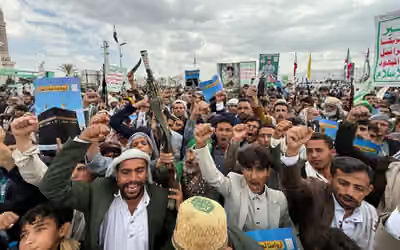
Hopes that the memorandum of understanding between Iran and the United States could evolve into a broader deal appeared increasingly remote on Monday as both sides carried out fresh strikes and clashed over control of the Strait of Hormuz.
The latest escalation saw the United States widen its attacks to dozens of locations across several Iranian provinces. While many of the reports could not be independently verified, they suggested a broader operational scope than in recent days.
US Central Command announced another round of strikes aimed at degrading Iran's ability to threaten commercial shipping through the Strait of Hormuz, the world's most important oil transit route.
State-affiliated Iranian media later claimed Tehran had launched extensive missile and drone attacks against US bases and vessels across the region.
Nour News, which is close to Iran's Supreme National Security Council, reported that the attacks had begun, while Sabereen News said several ballistic missiles had been fired from western and central Iran toward US military positions.
Bahrain's Interior Ministry subsequently activated air raid sirens and urged residents to avoid using or obstructing main roads unless necessary, adding that further safety instructions would follow.
A CENTCOM spokesperson told Al Jazeera that Iranian Revolutionary Guards forces had fired at commercial shipping in the strait, adding that US aircraft shot down an Iranian cruise missile and a one-way attack drone. Tehran has not confirmed those claims.
The maritime confrontation remained at the center of the escalation.
Iran continued to insist that the waterway remains under its control. Senior military officials said all foreign naval movements in the strait were under continuous surveillance and warned that no vessel would be allowed to enter Iranian territorial waters unlawfully.
In a strongly worded statement, Iran's Foreign Ministry accused the United States of violating both the memorandum of understanding and the UN Charter, saying American attacks over the past 24 hours had targeted transportation infrastructure, commercial shipping, cargo vessels and aviation facilities.
The ministry also accused Washington of pressuring Oman to undermine Iranian arrangements for managing shipping through Hormuz and warned Persian Gulf states against allowing their territory to be used for attacks on Iran.
It said the source of any attack on Iranian territory would be regarded as a legitimate target for retaliation.
The renewed military activity also rattled global markets.
Brent crude rose more than three percent in Asian trading as investors priced in the risk of prolonged disruption around Hormuz, through which roughly one-fifth of global oil supplies normally pass.
Regional governments appeared increasingly uneasy as the confrontation widened.
Iraq called for restraint and warned against actions that could endanger maritime navigation. Qatari officials, who had been attempting to preserve a diplomatic channel between Tehran and Washington, remained engaged with Iranian counterparts, although there was little indication mediation efforts were gaining traction.
Only days ago, officials on both sides continued to speak publicly about diplomacy. President Donald Trump said Iran had asked to continue talks and that Washington remained prepared to negotiate, while US officials described technical discussions as ongoing despite repeated violations of the ceasefire.
Those diplomatic signals now appear increasingly overshadowed by events on the ground.
Rather than serving as a bridge toward a broader agreement, the memorandum of understanding has become another point of contention, with each side accusing the other of violating its terms.
Supreme Leader Mojtaba Khamenei’s renewed call for revenge over his father’s killing has emboldened hardliners demanding concrete action, while raising questions over how such threats can be reconciled with Tehran’s stated openness to diplomacy.
In a message issued after the burial of former supreme leader, Mojtaba Khamenei described retaliation for his father’s death in a February 28 airstrike as “a national demand”, adding that it “will most certainly be carried out.”
Judiciary chief Gholamhossein Mohseni-Ejei, recently reappointed by Khamenei for another five-year term, immediately welcomed the declaration that revenge for his slain father was inevitable.
“We will pursue and punish the murderers of the martyred Imam,” he wrote on X.
Former IRGC commander Mohsen Rezaei, now a military adviser to the supreme leader, said US president Donal Trump and Israeli Prime Minister Benjamin Netanyahu had crossed the Islamic Republic’s “red lines” and “must be met with decisive and proportionate punishment.”
“Revenge is part of the path of the Revolution,” he added.
The declaration revived a contradiction at the heart of Iranian policy: whether Tehran can negotiate with Washington while presenting revenge against its president as a national or religious obligation.
Hours before Khamenei’s message, Trump said 1,000 US missiles were “locked and loaded” and aimed at Iran, with thousands more ready to follow if the Iranian government acted on threats to kill him.
The message also intensified pressure on officials viewed as favouring engagement with Washington.
Some hardline commentators portrayed it as drawing a clear line between the supreme leader and supporters of negotiations, while others complained that senior officials and institutions had been slow to endorse it publicly.
President Masoud Pezeshkian had earlier affirmed Iran’s right to avenge what he called the “historic crime,” while Parliament Speaker and chief negotiator Mohammad-Bagher Ghalibaf said those responsible would face justice.
Neither had publicly commented on Khamenei’s latest message at the time of writing.
Former nuclear negotiator Saeed Jalili said avenging Khamenei would be “a defence of every nation’s sovereignty” and “the greatest service to international law.”
Hardline political activist Ahmad Ghadiri argued that advocating Trump’s assassination fundamentally contradicts negotiations with Washington.
Amir Chizari, a political activist close to Ghalibaf, disagreed. He maintained that the obligation to seek revenge, which he said Khamenei had imposed on all Muslims, “does not contradict the negotiations that have taken place so far.”
Reformist journalist Ahmad Zeidabadi questioned the logic of pursuing both tracks simultaneously.
“Those who say Iran should negotiate and reach an agreement with the United States while at the same time planning to cut off Trump’s head, or demanding his extradition to Iran to be killed, what framework of political or practical logic are they following?” he wrote.
Some hardline figures called for the rhetoric to be translated into action.
Political analyst Ehsan Salehi told Hamshahri’s online television channel that security agencies should establish dedicated units to carry out revenge operations.
“The word ‘revenge’ is neither ambiguous nor open to interpretation,” he said. “It has a clear meaning: punishing and eliminating the killers. It cannot be diluted into harmless slogans or symbolic projects.”
Salehi argued that a stronger response to the US killing of Qasem Soleimani in 2020 might have deterred subsequent attacks.
Cleric Mohammad Fayyazi said Khamenei’s declaration had effectively made revenge official policy and urged the government to endorse it formally, without what he called “pointless diplomatic considerations.”
The debate exposed broader disagreements over Iran’s priorities.
The news website Rouydad24 argued that while parts of the political and military establishment consider revenge the country’s foremost objective, others see the deteriorating economy and declining public trust as the more immediate threats.
It warned that becoming trapped in “a vicious cycle of emotional decisions” could bring tougher sanctions, greater economic hardship and deeper domestic discontent.
One reformist-leaning user argued that revenge also required the capacity to carry it out.
“A country that could not guarantee the security of its late leader, and cannot fully guarantee the security of its current leader, should first restore its own strength before thinking about revenge,” the user wrote. “Otherwise, the result will be no different from before.”
Religious scholar Saeed Sadoughi raised a more fundamental question.
“Suppose Trump and Netanyahu are gone and revenge is achieved. Will the country’s problems be solved?” he wrote. “Will issues such as high-level uranium enrichment and the Strait of Hormuz simply disappear? Will the country suddenly move towards development and prosperity?”