Trump notifies Congress of renewed fighting in Iran

US President Donald Trump formally notified Congress that hostilities had resumed in Iran, saying American forces carried out “defensive strikes against targets within Iran” on July 7.
In a letter sent to congressional leaders on Friday and obtained by The New York Times on Monday, Trump said the strikes were conducted under his authority as commander in chief.
The notification is likely to intensify tensions between the White House and Congress over Trump’s authority to continue military operations in Iran without lawmakers’ approval.
Both chambers of Congress have voted to direct Trump to end the war or seek authorization to continue it, while the White House maintains that the president is acting within his constitutional powers.








Israel’s Mossad recruited former Iranian President Mahmoud Ahmadinejad and chose him to lead Iran after a planned operation to overthrow the Islamic Republic, Haaretz reported Monday, citing more than 30 political, defense, diplomatic and foreign sources.
The relationship began taking shape in 2022 after the Mossad gathered intelligence indicating shifts in Ahmadinejad’s views, the report said.
Israel focused on his belief that Iran could not continue under sanctions and that its nuclear program had become a burden rather than an asset.
A team of Mossad agents continued a mission involving Ahmadinejad after landing abroad on October 7, 2023, and learning of the Hamas attack on Israel, according to the report.
Then-Mossad chief David Barnea personally oversaw the operation and at one point skipped a security consultation with Prime Minister Benjamin Netanyahu to focus on developments involving Ahmadinejad, the report said.
By early 2026, Ahmadinejad had become one of Israel’s most significant assets and was chosen to take power after “Operation Puss in Boots,” which was intended to overthrow Iran’s government, end its pursuit of nuclear weapons and install a new leadership.
According to the report, the wider plan included influence operations inside Iran, arming and training Kurdish forces in Iraq, mobilizing minorities, recruiting collaborators and creating a land corridor for militia movements. Israel also sought to draw Azerbaijan into the war.
The plan faced opposition from Military Intelligence chief Shlomi Binder, Research Division head Ofir Mizrahi Rosen and then-national security adviser Tzachi Hanegbi, the report said.
Three days before H-hour, the disagreements reached such a boiling point that IDF Chief of Staff Eyal Zamir ordered everything halted. Nevertheless, Prime Minister Benjamin Netanyahu decided to proceed.
The plan collapsed before Kurdish forces fired a single shot, the report said.
Ahmadinejad, a hardline conservative known for fiercely anti-Israel rhetoric, was Iran’s president from 2005 to 2013. During his two terms, he allegedly denied the Holocaust, advocated Israel’s destruction and suggested Tehran could develop nuclear weapons if it decided to do so.
After leaving office, he was repeatedly barred from standing in presidential elections. Over time, Ahmadinejad distanced himself from the political establishment and criticized the system under Ali Khamenei, accusing senior figures of corruption, mismanagement and failing the public.
He also adopted a softer public image, portraying himself as a defender of ordinary Iranians and their economic and social concerns.
Ahmadinejad’s current status is unclear. Last week, he attended a state-run funeral for slain Supreme Leader Ali Khamenei in Tehran, months after an alleged airstrike on his residence which, reportedly set him free from a house arrest.
Britain said on Monday it would designate Iran's Islamic Revolutionary Guard Corps and two other groups under new state threats legislation, making it a criminal offense to support or assist them if the measure is approved by parliament later this week.
The IRGC, the Iran-linked Islamic Movement of Companions of the Right and Russia's GRU Volunteer Corps would become the first organizations designated under the National Security (State Threats) Act 2026, which received royal assent last week.
The British government said people who support or assist the groups after they are designated could face up to 14 years in prison, while those carrying out sabotage, including arson, on their behalf could receive life sentences.
The designation is separate from proscription under Britain's terrorism legislation and is aimed at foreign state-backed activity including espionage, interference, sabotage and physical attacks.
The new powers would also allow prosecutors in some cases to bring charges without having to prove a direct connection to a foreign state, making it easier to prosecute people acting for designated organizations, the government said in a statement.
Prime Minister Keir Starmer said on Monday his government “will never let Britain be a playground for states who want to spread fear, division and violence on our streets.”
“We have already taken tough action against the Iranian regime and those linked to it, and against Russian operatives and networks targeting our country,” he said. “These new powers will make it easier to prosecute and lock up anyone carrying out their dirty work here in Britain.”
The government said the Islamic Movement of Companions of the Right had publicly claimed responsibility for seven attacks this year on locations linked to Jewish and Israeli communities and Persian-language media in Britain.
The attacks included an antisemitic arson attack that damaged four Hatzola ambulances in Golders Green, north London, on March 23.
It said members of the IRGC's Quds Force were behind the organization and had “almost certainly” directed the group's attacks across Europe.
Britain's domestic intelligence agency, MI5, identified at least 20 potentially lethal Iranian-backed plots against people in the country over a one-year period, according to the government.
“Iran and Russia are using proxies and thugs to do their dirty work on our shores,” Home Secretary Shabana Mahmood said, adding that those working for the groups would be tracked down and imprisoned.
The government also plans to designate the GRU Volunteer Corps, which it described as a group controlled by Russia's military intelligence agency and used to recruit people online to carry out hostile acts including sabotage, arson and harassment.
Foreign Secretary Yvette Cooper called Iran and Russia’s use of proxy groups to conduct state-backed activity on British soil “reprehensible.”
“Their malign behaviour, and anyone who acts on their behalf, must be held to account,” she said. “We will take all measures necessary to protect the British people, at home and abroad.”
January protesters held in Greater Tehran Penitentiary are being kept in severely overcrowded and unsanitary conditions without adequate medical care, clean drinking water or sufficient food, according to multiple inmates and eyewitnesses who spoke to Iran International.
Several security prisoners held in Wards 1, 2 and 4 of Unit 6 described conditions that they said have worsened in recent months as authorities transferred growing numbers of detainees arrested during the January protests to the prison.
“Bedbugs crawl all over prisoners, and everyone is exposed to disease,” one inmate said. “Because of the overcrowding, if one person gets sick, the entire ward becomes ill.”
Overcrowding doubles prison capacity
According to the prisoners, each ward contains 15 rooms equipped with 15 beds, providing space for about 210 inmates after accounting for shared storage areas.
Authorities are housing roughly 500 prisoners in the same space, they said, forcing about half the inmates to sleep on floors or in corridors.
The overcrowding has contributed to infestations of bedbugs and lice and accelerated the spread of infectious illnesses, inmates said.
Former prisoners have previously described similar conditions at Greater Tehran Penitentiary, warning of severe overcrowding, inadequate healthcare and shortages of medical staff.
One former inmate said families often supply medicines because the prison clinic provides little treatment.
“The clinic does nothing,” the former prisoner said. “Only when someone is close to death are they transferred for medical care.”
Water, food and hygiene shortages
Prisoners said they have no reliable access to clean drinking water and must purchase bottled water from the prison store.
During the current summer period, however, the store has at times gone up to three days without bottled water, forcing inmates to drink tap water that they believe is unsafe.
Several inmates also described prison food as poor quality and said meals are occasionally not served, with one or two meals sometimes skipped every few days.
Political prisoners in Ward 6 also reported earlier this month that water supplies had been cut, air conditioning switched off and showers closed, which they said was intended to increase pressure on detainees. They also said weekly family visits had been suspended.
Cold showers, blocked toilets
Prisoners told Iran International that hot water is unavailable in prison showers throughout the year.
When inmates complain, prison officials tell them they cannot provide hot water and that prisoners must accept the conditions, according to the witnesses.
They also described blocked toilets that sometimes remain unusable for days, as well as shortages of cleaning supplies.
Dirty bedding, carpets and shared facilities have contributed to outbreaks of scabies and other contagious skin diseases, prisoners said.
Outdoor confinement in extreme heat
Witnesses also described mandatory outdoor exercise under direct sunlight during summer temperatures approaching 40 degrees Celsius.
Prisoners are required to remain in an uncovered yard for at least two hours each day and are not permitted to return indoors before the allotted time.
“The same happens in winter,” one inmate said. “Even if you were freezing, they would not allow you back inside.”
Protest detainees held alongside other prisoners
According to inmates, conditions deteriorated after authorities transferred large numbers of January protesters to Greater Tehran Penitentiary as prisons in the capital filled beyond capacity.
Some detainees said protest prisoners were placed in wards previously occupied by inmates convicted of theft and drug-related offenses.
Unlike Tehran's Evin Prison, where political prisoners often manage their own wards, Unit 6 at Greater Tehran Penitentiary is overseen by inmates convicted of ordinary crimes.
Several witnesses said that some of those inmates verbally abused protest detainees, encouraged confrontations and, in some cases, carried out violent attacks with the acquiescence of prison guards.
One witness said two protesters were stabbed during a confrontation, leaving one with severe hand injuries.
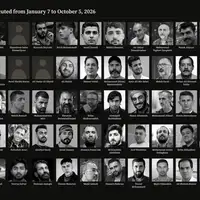
Several inmates said many of those arrested during the January protests are young adults, adding that the conditions inside the prison have left them in severe psychological distress while many remain in detention awaiting trial without being granted temporary release on bail.
Plastic waste has become a major environmental challenge in Iran, with poor enforcement of waste management regulations allowing single-use plastics to pollute natural areas and water resources, the country's environment chief said on Sunday.
More than two decades after Iran adopted its Waste Management Law in 2004, large parts of the legislation remain unenforced, leaving serious shortcomings in the management of household, medical, agricultural and industrial waste, Department of Environment chief Shina Ansari said.
“Plastic waste, particularly single-use plastics, has become a serious problem for nature, coastlines, tourist areas and water resources,” Ansari said. “Studies show that microplastics are entering the food chain, water resources and even drinking water, posing a serious threat to human health and the environment.”
Plastic consumption has become a growing environmental concern in Iran, driven largely by the widespread use of shopping bags, disposable tableware, drink bottles and food packaging. A 2024 review of municipal waste found that plastics account for about 7% of Iran’s waste stream by weight.
Enforcement gaps persist
Regulations governing waste disposal and recycling exist, Ansari said, but have only been implemented sporadically, leaving many environmental problems unresolved.
A 2022 regulation intended to reduce plastic bag consumption required manufacturers to phase out bags thinner than 25 microns and imposed obligations on large retailers. Ansari said the measures, like many environmental regulations, have not been properly enforced.
Many countries, she added, have introduced taxes, restrictions or bans on single-use plastic bags even before negotiations on a global plastics treaty are completed.
Short-lived use, long-term pollution
Around 95% of plastic bags in Iran are used only once, typically for between 12 and 20 minutes, before being discarded.
The problem is compounded by weak waste separation and recycling systems. Research on Iran’s plastic-waste sector points to gaps in regulation, enforcement, funding and technology, while informal collectors continue to play a major role in recovering valuable materials. As a result, much plastic waste is buried, openly dumped or left uncollected rather than being processed through an effective circular recycling system.
The bags can remain in the environment for 400 to 500 years before decomposing, contributing to long-term pollution of land and waterways, Ansari said.
The environmental effects are also increasingly visible. Researchers have detected microplastics in landfill areas, along Iran’s Caspian coast and in seawater, sediment and fish from the Persian Gulf.
Patients in Iran are increasingly turning to artificial intelligence for medical advice as healthcare costs outpace household incomes, prompting concerns from a public health expert that the technology could undermine treatment and trust between doctors and patients.
Unchecked reliance on AI for self-diagnosis and self-treatment risks compromising patient safety because the technology cannot replace physical examinations, diagnostic tests or clinical judgment, epidemiologist Hamid Soori told Khabar Online on Monday.
“Uncontrolled self-treatment and complete trust in AI recommendations, when there has been no physical examination, no diagnostic testing and many factors related to the illness have not been considered, could create a major challenge and dangerous consequences for public health,” Soori said.
The warning comes as AI-powered chatbots and search tools become a common first stop for many Iranians seeking explanations for symptoms before visiting a doctor. While the technology has expanded public access to health information, specialists say many users overestimate its reliability for diagnosing or treating medical conditions.
Healthcare costs fuel self-treatment
Soori said the problem is particularly acute in Iran, where many households struggle to keep pace with rising medical costs, encouraging more people to delay or avoid professional care.
“This situation is worse in countries where treatment costs are not proportionate to people's incomes,” he said. “Self-treatment has existed for years, but the arrival of AI could intensify its consequences.”
He warned that patients who arrive at clinics convinced by AI-generated advice may already have delayed treatment or taken inappropriate actions based on incomplete or inaccurate information.
Doctor-patient trust at risk
Beyond the clinical risks, Soori said greater dependence on AI could alter the relationship between physicians and patients.
“When patients come to doctors with information and recommendations generated by AI, in addition to the risk of worsening and complicating their illness and algorithmic errors, it may reduce trust in physicians' recommendations and disrupt the doctor-patient relationship,” he said.
He added that, like many emerging technologies, AI can be highly beneficial but also carries risks when it is widely accessible to people with limited medical knowledge.