“We have agreed to Iran talks, but the United States has stated to them, in no uncertain terms, that the ceasefire is over,” Trump said Friday, after renewed military exchanges raised questions over the future of a temporary memorandum signed last month.
Trump also told the New York Post that he had left instructions for Iran to be bombed at unprecedented levels if Tehran succeeded in killing him. “I’ve left instructions — if anything happens, to just literally bomb them at levels that they’ve never seen before,” he said.
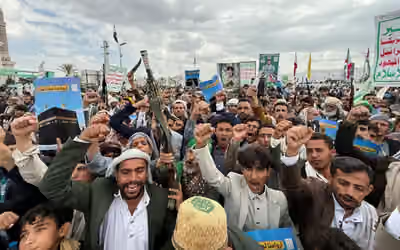
The warning came as calls to target Trump and avenge Khamenei spread across official and religious platforms in Iran. Ahmad Reza Hajati, the Friday prayer leader in Ahvaz, urged anyone with missiles or drones to kill the US president and “purge the earth” of his existence.
IRGC commander-in-chief Ahmad Vahidi said punishing those who carried out, ordered or supported the killings of Khamenei and several Iranian military commanders would remain a “certain, legitimate and unforgettable demand.” Other senior clerics and hardline politicians also called revenge a national, legal or religious right.
Diplomatic contacts nevertheless continued. Axios reported that a new round of US-Iran talks was expected next week, possibly in Switzerland, while Al Arabiya said technical teams from the two countries were due to meet in Pakistan on Sunday, July 12.
The Trump administration is also pressing Iran to issue a public statement acknowledging that the Strait of Hormuz is open and pledging to stop firing on commercial ships, Axios reported Friday citing US officials.
Iran publicly disputed the accounts. Foreign Ministry spokesperson Esmaeil Baghaei said Tehran had not requested negotiations with Washington, but had accepted a regional mediator’s request to visit Iran and discuss recent developments. He said the meeting took place Friday in Mashhad and that Iran conveyed its positions to the Qatari side.
As regional diplomacy continued, Iranian Foreign Minister Abbas Araghchi was due to travel to Oman on Saturday at the head of a diplomatic delegation for talks on regional developments, particularly the situation in the Strait of Hormuz, state-run IRNA reported. The report gave no details about his planned meetings.
A source close to Iran’s negotiating team separately denied that preparations for new talks had been finalized, IRGC-affiliated Fars News reported.
Qatar and Pakistan continued mediation efforts, seeking to de-escalate tensions, preserve the diplomatic track and address disputes over the Strait of Hormuz.
The military warnings also extended to Israel. Israeli Defense Minister Israel Katz said on X Friday that the Israeli military was prepared “at all times for any scenario in attack and defense.” Iran’s Supreme National Security Council Secretary Mohammad Bagher Zolghadr warned that any attack on Iranian infrastructure would draw a reciprocal response and that Israel would not be spared.
Senior US officials said Washington had military options to ensure Iran’s nuclear sites remained inaccessible, Reuters reported Friday.
The day ended with both sides signaling readiness for talks while trading threats that left the prospect of renewed conflict firmly in view.