The arrangement follows months of confrontation and is designed to reduce the risk of renewed escalation. But it does not settle the core dispute between Washington and Tehran: how much uranium enrichment Iran will be allowed to retain, and under what conditions.
That question has long been the hardest part of any agreement. The latest understanding may ease immediate tensions, but it leaves unanswered what comes next and whether follow-on talks can produce a more durable settlement.
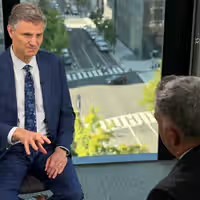
"The question is, do the follow-on talks yield a final deal that everyone can live with, do we go back to conflict, or do we just keep kicking the can down the road," Priddy said. "I think the most probable outcome is that they keep extending it."
Iran is unlikely to give up enrichment permanently, while the Trump administration has shown little interest in returning to a JCPOA-style framework that would allow limited enrichment under international safeguards.
Priddy said any long-term arrangement would probably need to include monitored enrichment, even if that remains politically difficult for Washington to accept.
"Iran is not going to concede to giving up enrichment forever," he said. "If we got to the point where the US could say yes, you could have limited enrichment under safeguards, a lot of other things start to become negotiable."
Priddy also said hardliners in Tehran may believe they have gained leverage after threatening the Strait of Hormuz, particularly after demonstrating they could use energy pressure to shape Washington's response.
"What I'm worried about at this point is I think there's a lot of hubris in Tehran right now among hardliners that they won the war," he said. "They can ask for everything now and get away with conceding very, very little."
Fears of higher gasoline prices and broader economic disruption helped push Washington toward restraint, while Persian Gulf energy infrastructure remained exposed.
Priddy described the situation as "mutually assured vulnerability," saying both sides now know they can target each other's energy infrastructure even if neither can eliminate the threat.
The regional fallout is likely to shape the next phase as much as the nuclear talks themselves. Persian Gulf states are likely to diversify their defence partnerships, while the United States may maintain a military presence in the region but with a smaller, more cautious footprint.
Israel remains the biggest wildcard in the next phase of negotiations. Washington appears intent on limiting further escalation, particularly in Lebanon, but Prime Minister Benjamin Netanyahu may still favour a more confrontational approach.
Priddy said he does not expect the current understanding to produce a grand bargain or a warmer relationship between Washington and Tehran. Instead, he said, the most likely outcome is a hostile but transactional relationship that is repeatedly extended rather than fundamentally resolved.