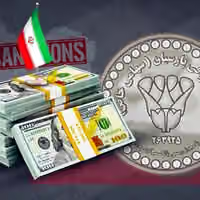
The relative strengthening of the Iranian rial suggests the agreement has already had a positive psychological impact.
The US dollar, which traded above 1.8 million rials during the recent conflict, has fallen to around 1.57 million. Even so, it remains roughly 18 percent higher than six months ago.
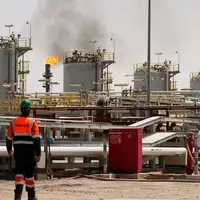
According to estimates by Kpler, Iran was exporting about 1.5 million barrels per day of crude oil and condensates before the recent conflict. Without sanctions, exports could eventually return to around 2.5 million barrels per day.
Iran would also no longer be forced to sell much of its crude to Chinese buyers at steep discounts.
Revenue boost
According to OPEC estimates, Iran earned $46.7 billion from exports of crude oil and petroleum products last year. If sanctions are lifted and oil prices remain relatively elevated, that figure could rise substantially.
A rapid recovery, however, should not be expected.
Iran's petrochemical and steel industries, which together generate roughly $17 billion in annual export revenue, have suffered extensive damage during the conflict.
As a result, Iran could temporarily become a net importer of some products it has traditionally exported.
Persian Gulf Holding, which accounts for 38 percent of Iran's petrochemical production, recently reported that output at six heavily damaged complexes fell to just 13 percent of levels recorded during the same period last year. Overall production across the holding's petrochemical subsidiaries declined by 75 percent.
According to Iran's Central Bank, oil, gas, steel and petrochemicals account for 73 percent of the country's total exports, underscoring the importance of rebuilding damaged industrial capacity.
Release of frozen assets
Iran is estimated to hold approximately $24 billion in frozen assets abroad, about half of which could be released within two months.
The Wall Street Journal reported on June 19 that, contingent upon what it described as appropriate Iranian behavior and the transfer of enriched uranium, Tehran could gain access to $6 billion in frozen funds currently held in Qatari banks for the purchase of humanitarian and agricultural goods from the United States.
The arrangement could benefit both countries. Iran imports approximately $17 billion worth of grain annually, while the United States remains the world's largest grain exporter.
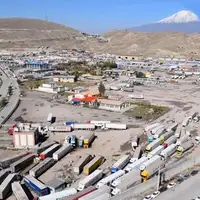
Trade between the two countries has collapsed since the 1979 revolution. According to official US statistics, bilateral trade totaled $6.6 billion in 1978 but amounted to only $60 million last year, almost entirely consisting of US exports to Iran.
The reconstruction fund
One of the most ambitious — and least defined — elements of the agreement is a proposed $300 billion reconstruction fund involving foreign companies, including firms from Arab states, to support Iran's reconstruction.
Unlike historical reconstruction programs financed by governments, the proposed fund is expected to rely largely on private investment. That raises significant questions about how such a large sum could be mobilized and whether foreign companies would be willing to commit substantial capital to Iran after years of sanctions, regional tensions and political uncertainty.
Beyond political considerations, investors would also have to weigh sanctions risks, regulatory uncertainty and the long-term stability of the investment environment before committing significant capital.
Given Tehran's strained relations with many Arab states in recent years, enthusiasm among regional investors may remain limited, although countries such as Qatar and Oman could encourage some level of participation.
For now, the creation of a fund on the scale envisioned by the agreement appears unlikely in the medium term. More modest investment flows may be possible if Tehran complies with future commitments and continues improving ties with its neighbors.
The need for investment is undeniable. Iran's oil and gas sector alone is estimated to require at least $300 billion in capital to modernize infrastructure and expand production after decades of underinvestment.
Ultimately, the economic benefits outlined in the agreement depend not only on sanctions relief but also on Tehran's ability to reassure investors, rebuild damaged industries and maintain stable relations with regional and international partners.
For now, the agreement has boosted expectations. Whether it can deliver a lasting economic recovery remains an open question.