In recent weeks, as the country absorbs the shock of conflict, economic strain and uncertainty, the hangings have continued quietly in the background.
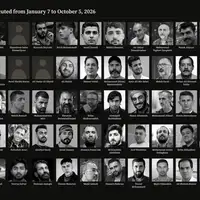
Rights groups say at least 21 people have been executed since late February, some linked to the January protests, others accused of ties to opposition groups or espionage.
Iran already had one of the highest execution rates in the world, but the pace has quickened, with trials that remain opaque and outcomes that few expect to change.
And yet, walking through the city, you would not necessarily know it.
Shops are open. Traffic moves. People go to work, or look for it. Life has narrowed to the essentials: finding money, paying rent, getting through the day. Internet access remains so limited that many only hear of these executions days later, if at all.
Mana, a 30-year-old mother of one, says she no longer allows herself to dwell on it. “You can’t think about everything,” she says. “You just have to get through the day.”
Hamed, 19, serving his mandatory military service, puts it more bluntly: “Nothing surprises us anymore after January. It doesn’t even add anger or hatred. It is hard to add to something that already feels complete.”
The latest case that briefly broke through that surface was that of Sasan Azadvar, a 21-year-old karate athlete from Isfahan who had been arrested during the January protests and was executed this week.
The judiciary accused him of “effective cooperation with the enemy,” saying he had damaged police vehicles, incited unrest and encouraged others to take part in riots.
His funeral was held under heavy security presence. But an image emerged of his family curled over his body, pain visible in every still movement.
For a moment, his name travelled through word of mouth, through whatever fragments of connection still function.
Nahid, 56, a clerk at a public institution, says that when news like this spreads, people do feel it. “You get sad, you curse the rulers,” she says. “But then you go back to your life, as helpless as the day before.”
Officials describe executions as a matter of law, of security and deterrence. Many here understand them differently, as a message that requires no elaboration: if you come out into the streets, you may be shot; if you are arrested, you may not return.
What makes this moment harder to ignore is the contrast. The same system shows itself capable of patience and negotiation when dealing with its external adversaries.
After months of war, after airstrikes and the killing of senior commanders, officials are willing to sit across the table from those they describe as enemies, debating terms, exchanging proposals and searching for a settlement.
The logic is not difficult to grasp, as Mana puts it.
“I’m not into politics, but even I can see they pursue a deal with Trump because it can consolidate their power. A conversation at home would do the opposite.”
To engage openly with dissent would mean acknowledging it as something real, something that cannot simply be dismissed or suppressed. It would mean accepting a form of legitimacy that the system has long refused to grant.
And so the contrast persists: negotiation with those who bombed the country, but no dialogue with those who live in it.
The executions continue quietly, steadily, almost routinely, even as the country absorbs war, economic strain and isolation. Each case briefly punctures the surface, then recedes into the background of a society that has learned, out of necessity, to carry on.