A woman stands among body bags as families gather at a facility to collect the bodies of loved ones killed during protests. (January 2026)
After Iran’s deadliest protest crackdown in decades, authorities have extended their response beyond the streets into morgues, hospitals and family homes, turning the protesters’ bodies into a key tool for suppressing dissent and controlling the narrative.
Iran International has received a large volume of videos, audio testimonies and written accounts describing how the bodies of protesters killed in the latest unrest are being collected, stored and released under strict security conditions.
While a nationwide internet blackout, now about a week, has made independent verification difficult in some cases, Iran International has cross-checked and verified key elements through corroborating footage, eyewitness commentary and the consistency of reports from multiple cities.
According to senior government and security sources speaking to Iran International, the number of protesters killed during the current unrest is believed to be in the thousands, with estimates placing the figure at around 12,000.
Morgues under security control
Videos verified by Iran International show the continued transfer of protesters’ bodies to the Kahrizak forensic medicine complex south of Tehran. One verified video, dated Wednesday, shows dozens of bodies laid out inside large warehouse-style halls at the facility. In the same footage, a trailer is seen as security forces unload additional bodies.
Similar videos and reports received from Tehran, Mashhad, Isfahan and Rasht show what appear to be large numbers of bodies stored in forensic facilities and hospitals.
Field reports describe heavily securitized conditions around morgues and hospitals, with access tightly controlled by security forces. Families seeking information about missing relatives have described chaotic scenes, long waits and limited communication.
Pressure on families
Multiple sources told Iran International that families attempting to retrieve the bodies of their relatives face intimidation and pressure from security forces, including plainclothes agents and members of the Islamic Revolutionary Guard Corps.
According to these accounts, security forces have raided the homes of victims’ families and their neighbors, searched mobile phones, verbally abused family members and, in some cases, fired shots at walls during nighttime raids. Hospital conditions have also been described as critical, with families reporting security presence inside medical facilities.
Sources said authorities have informed families that bodies can only be released during the early hours of the morning. Burial ceremonies, they said, are restricted to individual funerals and must be completed by 4 a.m.
Several families reported being warned that if they refuse to comply with these conditions, the bodies of their relatives would be buried collectively, without their consent.
Families mourn as they gather at a facility to collect the bodies of loved ones killed during protests. (January 2026)
Paying for the bullets
One of the most consistent elements across testimonies received by Iran International is the demand for money in exchange for the release of bodies.
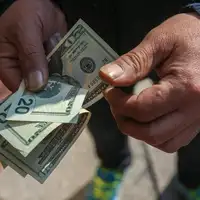
According to multiple sources, families are being told they must pay for each bullet used to kill their relatives. The amounts demanded range from 700 million rials to 2.5 billion rials per bullet, depending on the case.
At the current exchange rate of approximately 1,450,000 rials to the US dollar, this translates to roughly $480 to $1,720. The average monthly income of a worker in Iran is less than $100, making such payments unaffordable for many families.
This practice is not new and has been used by Iranian authorities in previous crackdowns. However, they described its application during the current unrest as unusually widespread.
Forced Basij membership
In addition to financial demands, families have reported pressure to consent to their relatives being identified as members of the Basij militia, the paramilitary volunteer force of the Revolutionary Guards.
Rights monitors and sources said families are told that if they agree to a Basij membership card being issued posthumously for their relative, the body may be released without payment.
According to Dadban, a rights monitoring group, authorities in several cities have made free release of bodies conditional on families accepting that their killed relatives be registered as Basij members allegedly killed by protesters.
Rights groups say the practice amounts to forced identity alteration and an effort to inflate official claims of security force casualties, supporting authorities’ assertions that the unrest involved “terrorist elements.”
Hospitals overwhelmed
Audio testimonies sent to Tavaana, a civil society platform, describe hospitals overwhelmed by gunshot victims and bodies, with security forces intervening to prevent bodies from being released or funerals from taking place.
One audio account said security forces raided the homes of families who had managed to retrieve bodies. Another described a nurse who died by suicide after exposure to what was described as an overwhelming number of corpses.
Additional messages from Isfahan described widespread killings, mass arrests and refusal to release bodies. Some accounts said entire neighborhoods had lost at least one resident, with businesses shut down amid fear and anger.
Silencing grief
The restrictions placed on funerals and burials appear designed to prevent public mourning from becoming a focal point for further protest.
Families described being forced to bury their dead quickly, quietly and under surveillance. Some said they were instructed not to speak publicly or share images, while others reported continued monitoring after burial.
For many families, the process has turned private grief into a prolonged ordeal – one shaped by fear, financial coercion and the threat of erasure.
Iranian authorities have blamed foreign enemies, including the United States and Israel, for the unrest and have described the protests as a security threat. They have denied allegations of mass killings.