Rather than opening a public debate, officials are rolling out a complex web of fees, pricing tiers and regulatory adjustments that allow revenue to be raised quietly.
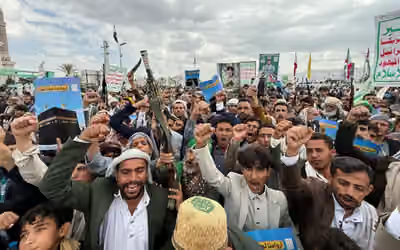
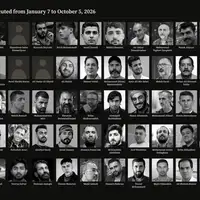
The move marks the first fuel price hike since November 2019, when a sudden increase sent Iranians into the streets and was followed by a violent crackdown that killed several hundreds.
That episode has loomed over economic policymaking ever since. Presidents have changed, inflation has surged and the currency has collapsed, but fuel prices remained largely frozen.
After years of hesitation, the administration of President Masoud Pezeshkian has moved to increase prices, but through a layered system that disperses the impact across rules and clauses.
The new policy replaces a flat rate with a multi-tier structure. More consequential, however, are the discretionary powers embedded in the legislation. It allows for annual price adjustments linked to inflation.
In practice, this means fuel costs can rise automatically in an economy where inflation remains high and largely policy-driven.
The reform also separates the base price of gasoline from additional “operational” or service charges that were previously bundled into the final cost. These fees are loosely defined and not capped, giving authorities room to raise the effective price without formal announcements or parliamentary debate.
Equally significant is a sunset clause affecting subsidies themselves.
Under the new rules, newly registered domestic vehicles are excluded from subsidized fuel. While officials have floated the possibility of delays or exemptions, the legislation is explicit. Over time, as the existing vehicle fleet is retired, fuel subsidies would effectively disappear.
To accelerate that transition, the state has introduced a set of regulatory incentives. High-consumption and foreign-made vehicles are removed from subsidy eligibility, while permits for new car production or imports are increasingly tied to the scrapping of older vehicles.
Critics warn this could create a secondary market for scrap permits, potentially benefiting intermediaries with political connections.
Officials argue that gasoline prices are artificially low, encouraging waste and disproportionately benefiting wealthier households with multiple vehicles.
On paper, these arguments align with standard economic theory, and the stated goal of reducing regressive subsidies has broad support among technocrats. What that framework often assumes, however, is a functioning market economy.
In Iran, price signals operate within heavy state control. The government seeks the revenue discipline of market pricing while retaining monopolies and administrative control.
Officials routinely point to excessive domestic consumption, yet President Pezeshkian himself has acknowledged that roughly 20 million liters of fuel are smuggled out of the country each day.
That scale of smuggling suggests organized networks rather than individual consumers.
Enforcement efforts, critics argue, have focused far more on end users than on the structures enabling large-scale arbitrage.
At the same time, consumers have limited ability to adjust. The state dominates the auto industry, restricting imports and leaving households reliant on inefficient domestic vehicles.
Chronic inflation—driven in part by fiscal deficits and monetary expansion—further erodes purchasing power, meaning price increases quickly translate into broader hardship.
Supporters of the reform counter that Iran’s budget constraints leave few alternatives and that some form of adjustment is unavoidable. They argue that delaying price reform only increases the eventual cost.
But standard market logic assumes choice.
In Iran, consumers cannot easily switch vehicles, suppliers or energy sources. Price increases function less as signals than as transfers, falling on a population already weakened by years of inflation.
For decades, the Islamic Republic has absorbed the costs of its regional and strategic ambitions by shifting the burden inward. Today, with limited room to ask for sacrifice, it appears to be relying instead on administrative complexity to impose it.
The mechanisms may be opaque and the data buried, but the effects are harder to disguise—and will ultimately be measured by what is no longer in the fridge.