• العربية
  • فارسی
BrandBrand
  • Iran Insight
  • Politics
  • Economy
  • Analysis
  • Special Report
  • Opinion
  • Podcast
  • Live TV
  • Iran Insight
  • Politics
  • Economy
  • Analysis
  • Special Report
  • Opinion
  • Podcast
  • Live TV
  • Theme
  • Language
    • العربية
    • فارسی
  • Iran Insight
  • Politics
  • Economy
  • Analysis
  • Special Report
  • Opinion
  • Podcast
  • Live TV
All rights reserved for Volant Media UK Limited
volant media logo

Female genital mutilation driven by local customs in southern Iran - study

Dec 14, 2025, 11:50 GMT+0Updated: 22:46 GMT+0
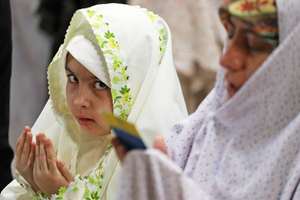
File photo of women in Iran’s southern Hormozgan province

A study on female genital mutilation (FGM) in Iran’s southern Hormozgan province finds the practice is sustained chiefly by family dynamics, gender stereotypes and local customs that often outweigh religious mandates.

Published by researchers at Islamic Azad University, the peer-reviewed paper appears in Social Problems of Iran (Autumn 2025) and uses grounded-theory interviews with 15 women (2022–23) to map causal drivers, intervening factors, strategies, and outcomes.

The authors report that cutting persists within kinship networks that link family honor to control over female sexuality, while misinformation and limited access to alternative medical or religious views reinforce continuity.

“The central category indicates the impact of religious and family institutions in the continuation and reproduction of the traditional pattern,” the paper said, adding that “local customs outweigh religious mandates, with religion serving more as a legitimizing discourse.”

They say women’s responses evolve from silence and avoidance in childhood to negotiation, alliance-building and seeking medical advice in adulthood, with education, urbanization and social-media advocacy widening pathways to change.

Reported outcomes include physical pain, reduced sexual satisfaction, traumatic recall and social withdrawal. “FGM causes physical, sexual or psychological harm or suffering to women.”

According to the paper, common misconceptions about the practice include beliefs that FGM preserves a girl’s “purity,” prevents immoral behavior or is a religious obligation.

“I had no idea what circumcision was until they did this to us,” said one 42-year-old participant.

Another woman described the experience as sudden and violent. “I was confused and completely unprepared. Like a chicken you grab to slaughter. Two female relatives held me down, tightly gripping my arms and legs, and then they took out the blade.”

FGM is practiced in several regions of Iran, particularly in western and southern provinces including Hormozgan, Kordestan, Kermanshah, West Azarbaijan, Ilam and Lorestan.

There is no comprehensive national data on its prevalence, but small-scale studies have reported varying rates across these areas.

The most common form documented in Iran is Type I FGM, involving partial or total removal of the clitoris or prepuce. Procedures are typically carried out by traditional midwives or elderly women using basic tools such as razor blades, often without anesthesia.

Iranian law does not explicitly criminalize FGM. There have been no known prosecutions, and official responses have largely been muted.

Most Viewed

Houthi gains reversed at Bab al-Mandab, but Iran’s leverage runs deeper
1
ANALYSIS

Houthi gains reversed at Bab al-Mandab, but Iran’s leverage runs deeper

2
INSIGHT

Iran, US back to ‘square one’ as diplomacy stalls

3

Iran’s own surveys reveal demand for 'fundamental change'

4
EXCLUSIVE

IRGC commander, son helped build new oil-sales network

5

Iran says economy holding up as pressure mounts on oil, rial

Banner
Banner

Spotlight

  • Iran looks for escape routes as US sanctions close in
    INSIGHT

    Iran looks for escape routes as US sanctions close in

  • China's turn to Iraqi crude shows growing impact of Iran oil blockade
    ANALYSIS

    China's turn to Iraqi crude shows growing impact of Iran oil blockade

  • Tehran divided over $2 billion plan to prop up rial

    Tehran divided over $2 billion plan to prop up rial

  • Parsian Exchange transferred millions of dollars for Iran despite sanctions
    EXCLUSIVE

    Parsian Exchange transferred millions of dollars for Iran despite sanctions

  • Iran protester recounts torture, mock execution after January arrest

    Iran protester recounts torture, mock execution after January arrest

  • Iran’s own surveys reveal demand for 'fundamental change'

    Iran’s own surveys reveal demand for 'fundamental change'

  • Iran executes nearly two people a week since January protests

    Iran executes nearly two people a week since January protests

  • Iran, US back to ‘square one’ as diplomacy stalls
    INSIGHT

    Iran, US back to ‘square one’ as diplomacy stalls

Banner
Banner
  • Iran steps up nationwide surveillance to prevent abortions

    Iran steps up nationwide surveillance to prevent abortions

  • Iran clinics bar nurses from marriage, childbirth to avoid staff gaps

    Iran clinics bar nurses from marriage, childbirth to avoid staff gaps

  • Beyond the hijab: discrimination against women pervades Iranian law

    Beyond the hijab: discrimination against women pervades Iranian law

  • Iran to remove anti-childbearing content from university curricula

    Iran to remove anti-childbearing content from university curricula