In mid-October 2025, Azerbaijan’s deputy prime minister announced the formal launch of an electricity-linkage project among the three countries.
The plan builds on Iran’s 2024 proposal to route Russian electricity through its territory to Persian Gulf Arab states, advancing earlier diplomatic pledges. Full integration is targeted by late 2025, alongside coordination with Armenia.
The initiative fits Russia’s push for southern energy routes under sanctions, but could undercut the strategic weight of the International North-South Transport Corridor (INSTC)—the trade artery linking India, Iran and Russia through Azerbaijan.
Shared leverage
A connected grid could deliver real economic and strategic gains.
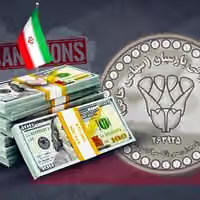
By balancing supply and demand across borders, it might ease chronic blackouts—especially in Iran, where sanctions have crippled capacity.
Surplus electricity from Russia and Azerbaijan’s renewables could offset Iranian shortages, while shared infrastructure encourages cross-border power sales and investment.
For Iran, participation promises stability and regional relevance; for Russia, another path around Western-controlled networks; for Azerbaijan, a global profile built on “green power outreach.”
Iran’s balancing act
Integration could offer Tehran both relief and peril.
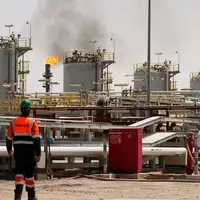
Years of underinvestment and gas dependency have left its grid aging and inefficient. Sanctions block access to capital and modern equipment, limiting meaningful expansion.
To benefit from the move and reduce vulnerability, Tehran needs to diversify its energy mix, curb waste and reform governance—meaning remove favoritism from energy planning and open the sector to transparent partnerships.
These are tall orders without which the project may only deepen Tehran’s reliance on Moscow.
Caspian crossroads
The grid plan also intersects with rival connectivity schemes.
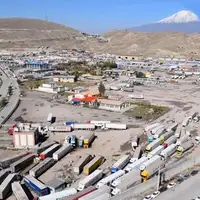
The International North–South Transport Corridor (INSTC)—a 7,200-kilometer multimodal corridor linking Mumbai to St. Petersburg via Iran and Azerbaijan—has been a lifeline for sanction-hit Tehran, yet it faces chronic delays and funding gaps.
Meanwhile, the EU-backed Black Sea Energy Corridor, launched in 2022, will send 4 GW of Azerbaijani wind and solar power to Europe by 2032. Faster, cleaner and politically safer, it already attracts more Western financing.
If momentum shifts toward the Black Sea route, Iran could lose as much as $10–15 billion in potential transit fees and influence, reinforcing its peripheral role in regional trade.
The choice ahead
Moscow’s dominance—and its expanding 2025 alliance with Tehran—could give it decisive leverage over energy supply, echoing Gazprom’s tactics in Europe.
Western sanctions on both Moscow and Tehran could deter investment and drag Baku into secondary penalties.
Regional flashpoints—from Armenia-Azerbaijan tensions to Iran’s domestic volatility—add fragility. Environmental and technical challenges add further strain, chief among them: fluctuating Caspian water levels and climate stress on Iran’s water-energy nexus.
The Iran-Russia-Azerbaijan grid could make Tehran a regional electricity hub or entrench it as Moscow’s junior partner.
Two visions now compete around the Caspian: one driven by geopolitical necessity, the other by the global green transition. How Iran navigates between them will determine whether this bridge becomes a lifeline—or another bind.