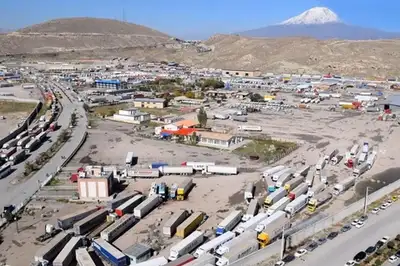
Iran’s customs chief Faroud Asgari confirmed the shift without specifying trade volume for the first half of the current Iranian fiscal year (March 21–September 22).
Figures from Iran’s Chamber of Commerce show, however, that bilateral trade totaled less than $1.1 billion in the first five months—just 4.5% of Iran’s total non-oil foreign trade.
This comes despite a 2023 agreement between Tehran and Moscow to boost annual trade to $40 billion after Russia’s invasion of Ukraine and the onset of Western sanctions.
Last year, Iran–Russia trade stood at $2.5 billion.
Exaggerations
Following reports that Russia had fallen off Iran’s main trading list, Deputy Trade Minister Mohammad Ali Dehgan said Iranian exports to Russia had grown by 30% in the first five months of this year, “approaching one billion dollars.”
But data from the Chamber of Commerce show the real figure was less than half that amount.
Tehran has long tried to frame its ties with Moscow as a deep strategic alliance, though critics say Russia sees Iran merely as a tool in its standoff with the West.
Former foreign minister Mohammad Javad Zarif recently said Russia “sabotaged” talks between Tehran and Western powers, calling any improvement in Iran–West relations a “red line” for the Kremlin.
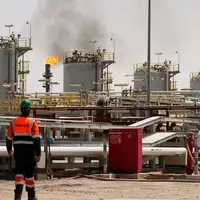
Despite signing more than 100 memoranda of understanding and contracts in the oil and gas sector, Moscow has failed to implement any of them or deliver promised investments in Iran’s logistics infrastructure.
Even so, Russia moved two weeks ago to activate its “Comprehensive Strategic Agreement” with Tehran—a pact focused on military and security cooperation rather than trade or investment.
In 2018, Moscow pledged $40 billion in investments after US President Donald Trump tore up the 2015 nuclear deal and reinstated sanctions on Iran. That promise never materialized either.
Such agreements appear aimed more at encouraging Tehran to resist Western pressure than advancing real economic cooperation. Iranian officials, in turn, use them to project strength and deny isolation at home and abroad.
Broader trade decline
According to customs data, Iran’s non-oil exports reached about $26 billion in the first half of the fiscal year, nearly unchanged from last year, while imports fell 15% to $28.3 billion.
Iraq remains Iran’s second-largest non-oil export market after China, but exports to Iraq dropped 12% year-on-year to $4.5 billion, mostly food products.
In late September, Iraq banned the import of 44 types of agricultural and livestock goods to protect domestic producers, further cutting Iranian exports.
Three-quarters of Iran’s total exports now go to just five countries—China, Iraq, the United Arab Emirates, Turkey, and Afghanistan—underscoring the growing concentration and isolation of its trade.
The same pattern holds for imports. For the first time, 80% of Iran’s imports this year have come from only five countries: the UAE, China, Turkey, India, and Germany.
The trend is not promising for Tehran as UN sanctions return: if trade with Russia fails to recover, nearly all of Iran’s economic eggs will be in the Chinese basket.