President Ahmed al-Sharaa meets with US Congressman Cory Mills - April 19, 2025
The first American lawmaker to meet Syria’s new president told the Eye for Iran podcast that Washington must give the new rulers of Damascus a chance if it hopes to banish Iran from the country.
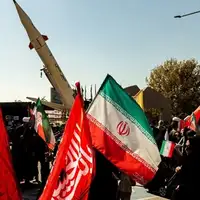
Key to that mission, Congressman Cory Mills said, was enabling de facto president Ahmed al-Sharaa to scotch what remains of Iran's influence in Syria.
"What do we truly have to lose in this? You know, we know what we have to lose if they ... allow Iran to create a proxy state and what that means for the region and what that means for our allies," Mills said.
Syria’s new leadership is working to stamp out any Iranian activity on its soil, just months after a rebel advance led by al-Sharaa uprooted the Assad dynasty, Tehran's oldest Arab ally.
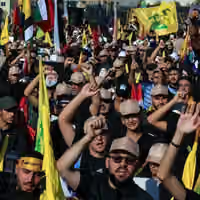
Damascus has been expelling proxy fighters, cutting off arms transfers to Hezbollah and pursuing new diplomatic partnerships across the region, including potential ties with Israel, Mills told Eye for Iran.
“He’s not allowing these proxy militias to continue to operate there as they did under the Assad regime,” Mills said.
Syria for Syrians
Mills argues this shift presents an opportunity for Washington to engage—both diplomatically and economically—before Russia, China or Iran move to fill the vacuum.
“If we actually open up the platform to allow for contract bidding, to rebuild infrastructure, that is a great first start,” he said, pointing to areas like water, electricity, and telecoms. “This is one of the most strategic geolocations in the entire region.”
Such engagement, he added, would not only counter authoritarian influence—it would create opportunities for American companies, reinforce regional stability, and help prevent Syria from sliding back into sectarian violence.
“The Iranian people could take a lot away from what has happened in Syria,” he said. “This could be them too. But it has to be an Iranian strategy, not an American strategy.”
Sanctions and Syria's new leadership
Until recently, Ahmed al-Sharaa was himself under US sanctions due to his leadership of Hay’at Tahrir al-Sham (HTS), an Al-Qaeda affiliated group designated as a foreign terrorist organization by the State Department.
On May 13, 2025, President Donald Trump while visiting Saudi Arabia last month made a shock announcement that he was lifting US sanctions on Syria.
Mills stressed that engagement with al-Sharaa must come with clear-eyed realism. “Trust but verify,” he said during the interview. “I think he knows what he has to do. He’s already taken actions that are not just words.”
Diplomatic overtures and regional stability
Mills revealed that al-Sharaa expressed interest in normalizing relations with Israel—albeit cautiously. While no formal talks have begun, the signal alone marks a dramatic shift from the Assad era, which was defined by hostility toward Israel and alignment with Iran and Hezbollah.
“He actually said that we would look at a good relationship and partner with Israel—not the 'Zionist state' ... but he knows the risk that he's taking,” Mills said.
The potential for Syrian-Israeli normalization would echo the Abraham Accords, a US-brokered framework that reshaped parts of the Middle East by bringing Israel into diplomatic relations with several Arab states.
Mills said any future agreements must respect Syria’s sovereignty. “What I don’t support is a balkanization of other sovereign territories,” he said. “I think that good fences make good neighbors.”
The trip to Damascus, however, was not without danger. Mills told Eye for Iran that Islamic State had allegedly plotted to assassinate him while he was in Syria. “They had already put together where they were going to utilize a car bomb,” he said. “They had already put together the location.”
Despite the risks, Mills argued that Syria’s political realignment offers the United States a rare chance to help shape a post-war roadmap—one that sidelines Iran, opens new diplomatic channels and bolsters long-term regional stability.