Ex-Iranian Oil Official Says US Elections Aiding Oil Sales
Mehdi Hosseini, Iran's former Deputy Minister of Oil, said oil sales have become easier under the Biden administration as Washington tries to keep gas prices low while the US elections approach.
Hosseini said, "The Americans want gas pump prices to be low and therefore allow Iran to increase its supply." However, former foreign minister Javad Zarif said earlier this week that the US government allowed Iran to break sanctions and export oil in the last three years.
The Iranian hardliners claim credit for the current government's ability to sell more oil despite sanctions, touting their strategies and "energy diplomacy." However, statistics and expert analyses suggest that the increase in oil exports is more attributable to decisions by the White House not to enforce sanctions.
With the US approaching elections, there is a strong need for low gasoline prices to gain votes, providing Iran with an opportunity to boost its oil production, claimed Hosseini.
However, Iran's oil exports, almost all to China, began to increase after a huge drop in 2019-2020, when Joe Biden was elected president in November 2020. Candidate Biden had promised to reverse President Donald Trump's decision to leave the JCPOA nuclear deal and impose sanctions on Iran.
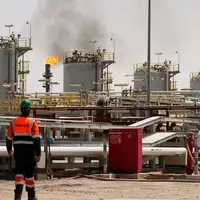
Iran's crude output has risen to approximately 3.6 million barrels per day (b/d), according to the country's oil minister, Javad Owji, the highest production levels since sanctions were reimposed on Tehran's oil sector.
"Our oil production, which was 2.1 million b/d at the beginning of our time in office [in September 2021], has reached 3.6 million b/d," Owji stated during a presentation to the Iranian parliament on Wednesday.
Iran's Acting President Mohammad Mokhber also said Thursday that the country's oil sales capacity had been less than 300,000 b/d when Raisi took office but rose to about 1,800,000 b/d in less than a year and a half.
The additional output and exports to China, which are around 1.3 million barrels a day, generate around $37 billion a year for Iran. Although it is not clear if China pays all cash for the oil or exports good to Iran, the income is the main lifeline for Iran's battered economy.
The reasons for the revival in exports have been debated, with some attributing it to more relaxed enforcement of sanctions by the US, and others to Iran's improved methods of circumvention.
The debate has even become a point of contention among Iranian presidential candidates as they gear up for the country's snap election on June 28.
Conservative candidates and hardliners largely attribute the boost in exports to their own methods of evasion with Raisi administration officials repeatedly pointing to their success in raising exports.
But the 'reformist' camp refutes those claims, with former Foreign Minister Javad Zarif rejecting the conservative narrative on state television on June 18.
"They [hardliners] said 'we taught them how to sell oil.' Not at all," Zarif stated. "When Biden took office, his policy was to loosen the screw. Wait until Trump returns to office, and then we can see what [the hardliners] say."
He also argued that the Biden administration was willing to return to the nuclear deal that former President Donald Trump unilaterally withdrew from in 2018. However, according to Zarif, the opportunity was squandered due to pressure from both Israel and Iranian hardliners, who pushed the government to escalate the nuclear crisis.