Corruption And Mismanagement Drive Workers To Suicide In Iran

Maryam Sinaiee
Iran International

The suicide of six workers at a petrochemical plant in Iran in less than two years is viewed by a prominent economist as an extreme form of protest.
Iran International
The suicide of six workers at a petrochemical plant in Iran in less than two years is viewed by a prominent economist as an extreme form of protest.
Hossein Raghfar, an economist at Tehran's Al- Zahra University, known for his research on poverty in Iran, expressed this perspective in an interview with the Didban-e Iran news website after two workers, Javad Norouzi and Mostafa Abbasi, attempted suicide at the Ilam Petrochemical Plant in Ilam Province. Their attempt was by hanging themselves, and although they were rescued by colleagues, they are reportedly in critical condition in the hospital.
Raghfar believes the widespread corruption in the government and mismanagement of the economy, mostly controlled by regime insiders, drive some workers to the desperate act of suicide.
The two workers were among thirteen workers the company announced Thursday it wanted to lay off. Colleagues also told ILNA website that the two men hanged themselves at the plant to make a point so that authorities could not claim family issues had driven them to suicide.
In July another employee of the company, Heydar Mohseni, a married father of two, took his own life after receiving a dismissal order after eighteen years of service. This was the fourth such incident within a period of twelve months.
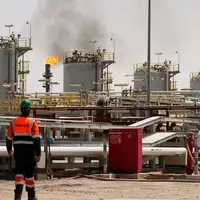
With around 2,000 employees, Ilam Petrochemical Plant is the largest private sector petrochemical company in the west of Iran. However, its production, inaugurated in 2020, is currently only at around fifty percent of its nominal capacity due to feed procurement issues.
Workers have reported receiving very low wages for harsh working conditions, with irregular payments. Like many Iranians, they have also had to endure austerity resulting from an inflation rate of well over 40 percent in the past three year.
Hossein Raghfar stated that "self-destruction and suicide are one of the most acute and extreme forms of protest to the chaos caused by wrong economic policies." He attributed the prevalence of depression and extreme actions to the perception of widespread financial corruption in government systems, which can lead to anger, rage, and, ultimately, suicidal acts as a form of protest and rebellion when economic and social policies erode hope in the future for many people.
Company officials say the workers who attempted or committed suicide were contract workers and declined to take responsibility. However, this is what most oil and petrochemical sector companies do, by not offering permanent employment. Their owners and managers are mostly well-connected people, who get away with violating rules and regulations.
Other workers told ILNA that for a month there had been talk of laying off thirteen workers, all of whom had an employment record of between eight and eighteen years. Workers claim laying off these workers for redundancy is only an excuse to replace them with others.
“The petrochemical plant is our only hope. The only place we can work. Where can we find work if we are sacked from here,” ILNA quoted workers as saying.
“You cannot violate the job security of workers with 8 to 18 years of service by pointing a finger at contractors and arguing that contractors leave, so the workers [in their employment] must leave, too,” Farshad Esmaili, labor law expert, told the Iranian Labour News Agency (ILNA).
“Outsourcing, dropping the value of labor, temporization [of employment] and deregulation which are the characteristics of neo-liberal economy, are policies that lead to worker suicide,” he said.
Ilam has one of the highest rates of unemployment among Iranian provinces as well as the highest rate of suicide in the country in all but three years over the past three decades.