Khamenei Addresses Workers Amid Bread Crisis, Uncertainty

Mardo Soghom
Iran International

Iran’s Supreme Leader Ali Khamenei addressed workers Monday as rising prices have led to protests, deep apprehension and political uncertainty in the country.
Iran International
Iran’s Supreme Leader Ali Khamenei addressed workers Monday as rising prices have led to protests, deep apprehension and political uncertainty in the country.
After days of chaos for people and politicians, with bread prices rising and essential commodities such as cooking oil disappearing from shelves, Khamenei’s unannounced meeting with workers’ representative appeared to be aimed at showing him as a supporter of labor.
In his speech at the event, however, Khamenei did not mention the economic crisis and rising prices and repeated a series of rhetorical statements that often Islamic Republic officials utter more as a wish-list than practical economic plans.
Khamenei called workers “the supporting pillar of production”, and repeated slogans such as “increasing job opportunities”, “equitable relationship between labor and capital”, and “job security”.
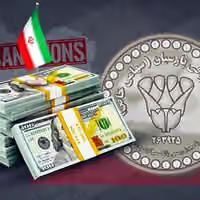
Unemployment, partial employment and declining wages have plagued Iran’s workers, specially in the last decade, when international and American sanctions have weakened the economy and a huge wealth gap has opened in society.
The highly corrupt “privatization” of government enterprises has led to the closure of many factories and companies, leaving tens of thousands of workers unemployed or unpaid for long periods of time. Labor unrest since 2017 has led to hundreds of protests and strikes.
Without mentioning the above-40-percent inflation rate and the politically sensitive rise in bread prices, Khamenei tried to express support for President Ebrahim Raisi’s government and called for all entities to support his administration.
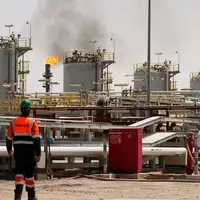
Raisi is under fire even by some of his hardliner supporters for appearing as disorganized and clueless over the handling of the economic crisis, although his administration has taken credit for circumventing United States’ sanctions and exporting one million barrels of oil per day.
Khamenei also tried to show that the regime he presides over values the contribution of workers, but the first example he mentioned related to the 1980s and the war with Iraq, when he said 14,000 workers were “martyred” in battle. He also thanked workers to “standing up” to US sanctions and keeping production alive.
In fact, the sanctions have cost Iran a lot of non-oil sector production losses and the closure of thousands of small producers, according to what officials and government-controlled media have reported in recent years.
Khamenei also claimed that workers have supported his regime but admitted that workers have “rightfully” protested “wrong privatization”.
He went on to say that contrary to Communist system and “exploitative” capitalism the Islamic government is appreciative of workers contribution.
An average Iranian worker now earns around $150 a month and with rising prices cannot afford most daily food items, such as meat or fruits. In 1970s, before the revolution and the Islamic Republic, an unskilled worker earned around $140, when the Iranian currency was 4,500-fold stronger than today (US dollar at 70 rials in 1978 compared with 285,000 now). Skilled workers earned as much $500 a month in mid-1970s, which provided incomparable purchasing power at the time.
The Supreme Leader reiterated his support for Iran’s closed economic system, emphasizing that imports should be minimized and domestic production increased, although recently there have been complaints by officials and politicians about the low quality of Iranian cars, while imports remain restricted.