Khamenei Says Solving Iran's Economic Problems Soon 'Is Not Realistic'

Resolving Iran’s economic problems and improving people’s lives in the near future is not realistic, Supreme Leader Ali Khamenei said in a New Year message.
Resolving Iran’s economic problems and improving people’s lives in the near future is not realistic, Supreme Leader Ali Khamenei said in a New Year message.
Khamenei in a rare instance admitted that people faced “hardships, high prices and inflation” in the past Iranian year, which ends on Sunday, March 20, but expressed doubt if the economic crisis can be overcome soon.
“Well, [economic hardship] should be resolved. We hope part of these [problems] can be resolved in the coming year, since all cannot be dealt with. These [problems] will be resolved gradually,” he said in his customary New Year video message.
Khamenei rarely admits that the country faces serious economic problems, often praising progress and highlighting the resilience of the Islamic Republic in confronting challenges and overcoming what he calls “enemy” conspiracies.
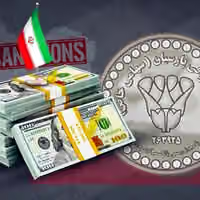
Iran’s economy experienced a serious recession from 2018-2020 as the United States withdrew from the Obama-era nuclear agreement, the JCPOA and imposed tough oil and banking sanctions. Its currency rial has lost value eightfold and inflation has been hovering around 40 percent for more than a year. Officials say a slight economic growth has started since 2021 but it has had little impact on the hardships people face.
Khamenei maintained that “to show haste and say that, no, soon [problems will go away], is not realistic.”
Despite admitting that serious economic problems exist, Khamenei insisted that the “Americans confessed…that they experienced a humiliating defeat in their ‘maximum pressure’ against the Iranian people.” Khamenei underlined that the word “humiliating” was used by Americans themselves. He was clearly referring to statements by Biden administration officials who repeatedly have said that sanctions imposed by former president Donald Trump have failed to change Iran’s behavior.
This was the second time in recent months Khamenei has used statements by the Biden administration to claim victory against US sanctions, while Iran has faced a dangerous economic crisis.
Hardliners who are loyal to Khamenei bashed former president Hassan Rouhani for the long-running economic crisis, while the main cause of the deterioration in the already weak economy were US sanctions. Admitting the devastating impact of restrictions on oil exports and international banking would mean accepting that Khamenei’s anti-West foreign policy was the cause of hardships.
Khamenei backed Ebrahim Raisi (Raeesi) for president in the June 2021 vote, with hardliners insisting that a government dominated by their faction could address economic problems despite US sanctions.
Raisi has not been able to achieve much since last August, except more clandestine oil exports to China because of less strict US implementation of sanctions by President Joe Biden’s administration.
Nuclear talks lasting for a year have not revived the JCPOA, although apparently the United States has been willing to make important concessions.
Khamenei also claimed that last years presidential elections was “one of the sweet” events, praising voter participation. In fact, Iran experienced the lowest rate of voter turnout, below 50 percent, as all serious candidates were barred from running against Raisi, making it a completely uncompetitive vote.
The 83-year-old cleric ruling Iran since 1989 also praised the handling of the Covid-19 pandemic, while he had banned the purchase of American and British vaccines in January 2021, leading to the unnecessary deaths of tens of thousands of people in a severe wave of infections from June to September.