Iran Plans To Take More Money From National Reserves

Maryam Sinaiee
Iran International

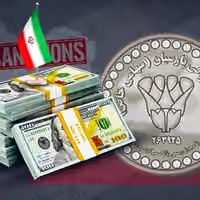
Iran’s government is again planning to take money from the National Development Fund (NDF) to finance its budget next year, as sanctions have cut its revenues.
Iran International
Iran’s government is again planning to take money from the National Development Fund (NDF) to finance its budget next year, as sanctions have cut its revenues.
The government’s plan is to slash in half the amount of money from oil sales which is supposed to be saved in the NDF and spend it on its operations.
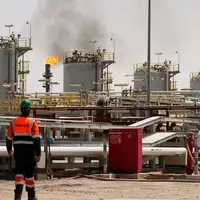
According to the charter of the National Development Fund, 40 percent of oil revenues next year should be saved by the government in the fund for investment on productive economic activities that would guarantee the welfare of future generations. NFD is a sovereign wealth fund.
Now, the budget bill presented to parliament on December 12, proposes to save only 20 percent of oil revenues and transfer the other 20 percent to the government.
At the time of its establishment, the fund's share from oil revenues was 20 percent to be increased by 3 percent annually until the end of the Fifth [five-year] Socio-Economic Plan in 2016. The fund's share from oil revenues increased to 30 percent with a 2 percent annual increase during of the Sixth [Five-year] Socio-Economic Plan.
"What has happened in reality, however, is [various] administrations' request to pay less into the fund and to take hold of the rest [of the money destined for the fund] as [US] sanctions grew stronger and oil revenues fell," the Iranian Students News Agency (ISNA) wrote Sunday.
Another problem with this scheme is that Iran might not be able to repatriate all the oil revenues because of US banking sanctions, which means the NDF money the government wants to spend will not enter the country as hard currency. Economists say that in such a case, borrowing from the fund would mean printing Iranian rials and spending it in the country, further fuelling inflation, which now stands at the annual rate of 45 percent.
Since its establishment in 2000 as a currency reserve fund, all administrations have borrowed from the fund for various purposes, including 2 billion euros in 2019 to increase the military's budget. The administration of President Mahmoud Ahmadinejad borrowed heavily from the fundwhich had been handed over to him with over $24b, including $2.7b to pay New Year cash handouts to all Iranians in 2013.
In 2008 the government of President Ahmadinejad classified information about the fund. In 2013, the newly elected President Hassan Rouhani said the fund had completely been drained by his predecessor's government. There is currently no concrete information on the fund's assets, but it is clear billion were withdrawn since 2018 when the United States abandoned the 2015 nuclear agreement and imposed sanctions.
The amount that the Raisi administration intends to borrow, half of the fund's share, will be the largest percentage ever drawn from the fund.
Withdrawing, or borrowing, from the fund requires the approval of Supreme Leader Ali Khamenei.
In 2020, Khamenei did not approve the Rouhani administration's request to slash NDF’s share from oil revenues and add it to its budget revenues.